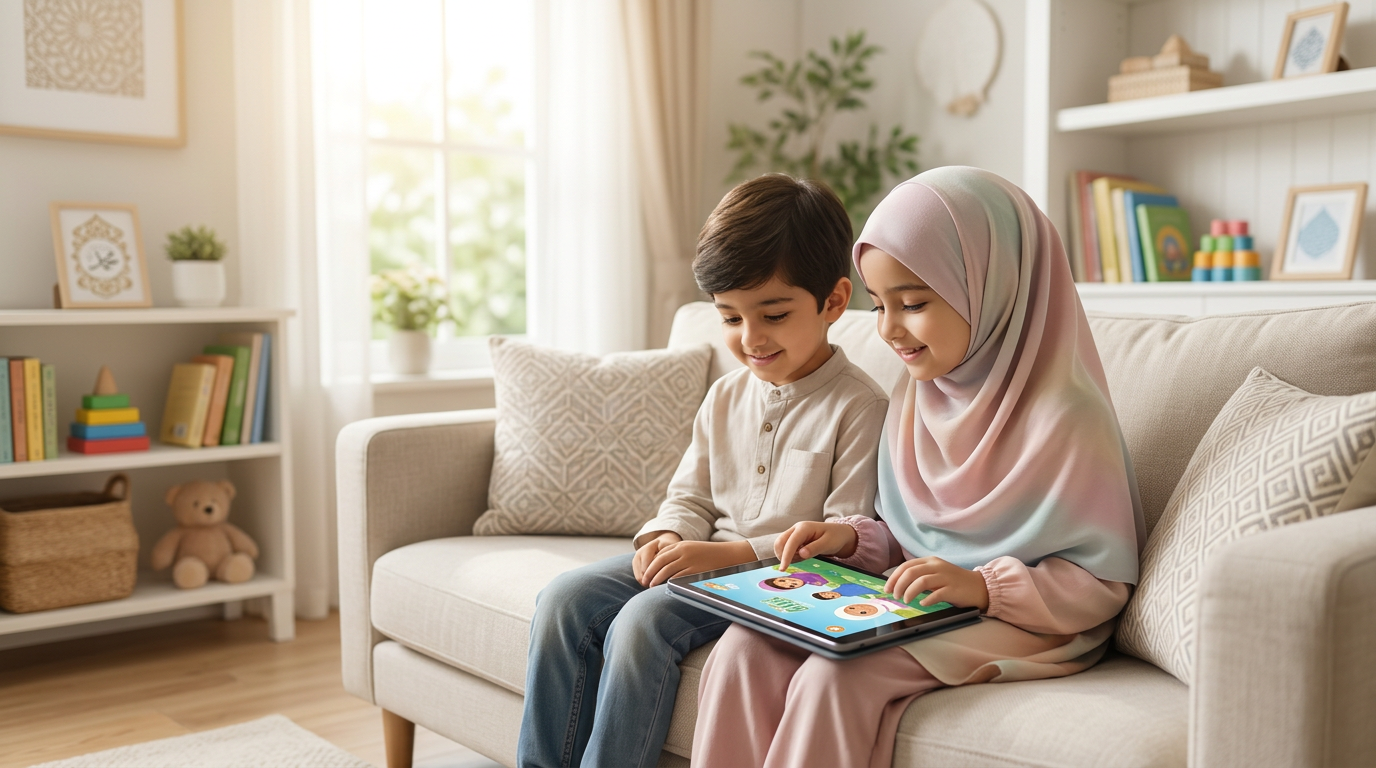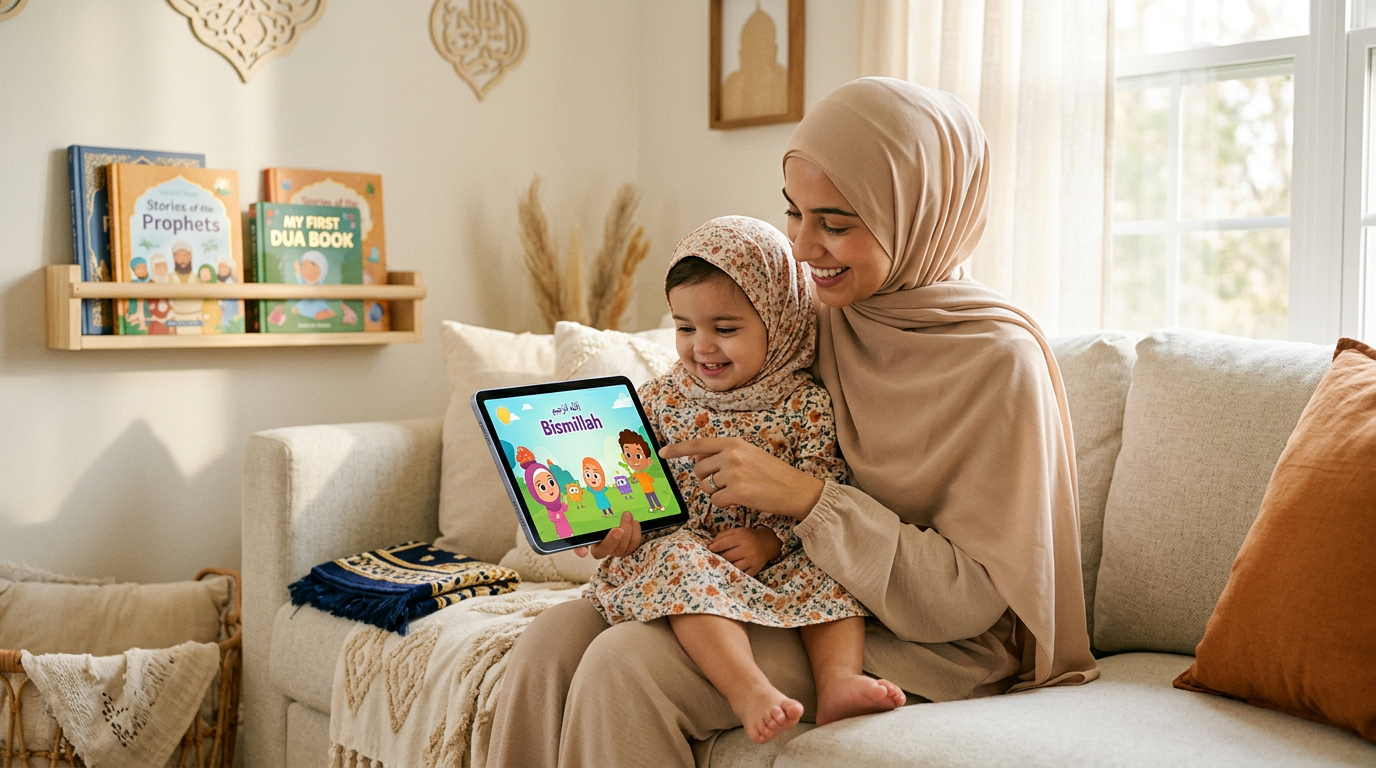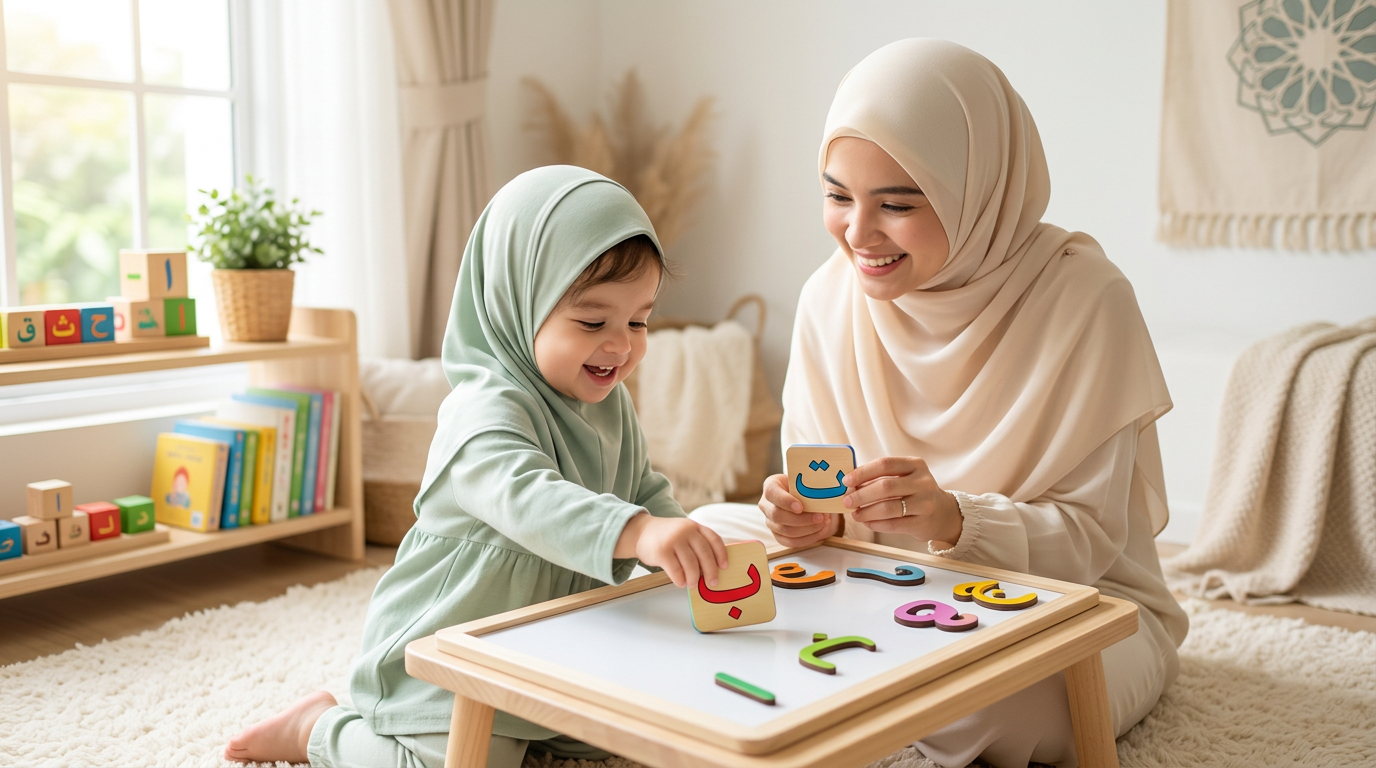
Imagine your toddler’s face lighting up at an Alif—not because of a loud video, but through a calm experience that feels like a warm hug for their soul. During the first 1,000 days, your child's brain is a spiritual sponge, making this window a sacred Amanah. We know the "digital default" often feels like a chaotic landscape of overstimulating ads that disrupt your child's natural peace.
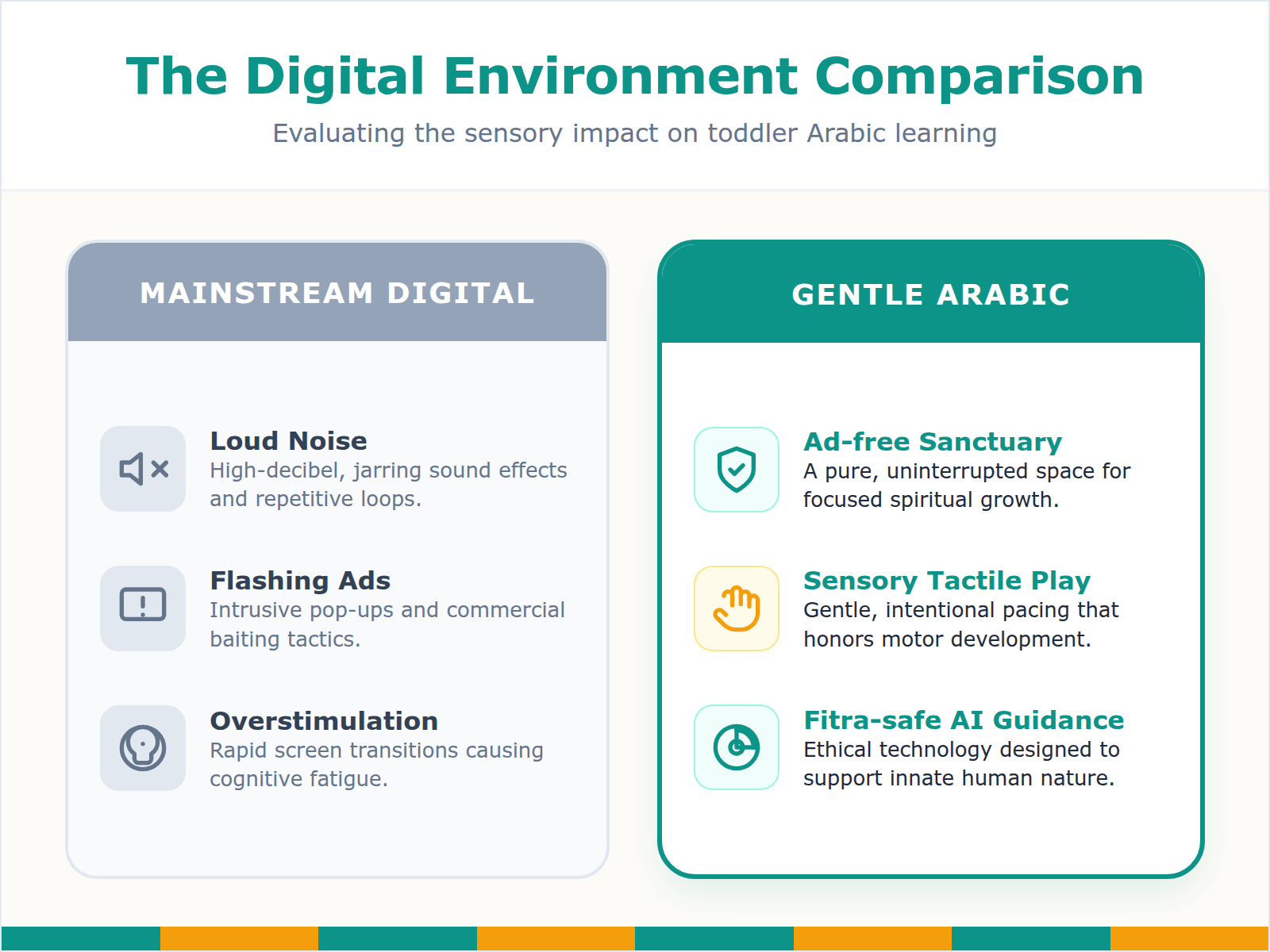
We’re here to help you protect your child’s fitra by embracing a "Low-Stim, High-Touch" framework. This "Gentle Arabic" approach combines AI-guarded digital spaces with the tactile play that builds lasting neurological connections. By focusing on digital hygiene, we can transform arabic alphabet learning for toddlers into a restorative ritual rather than a source of screen-time anxiety.
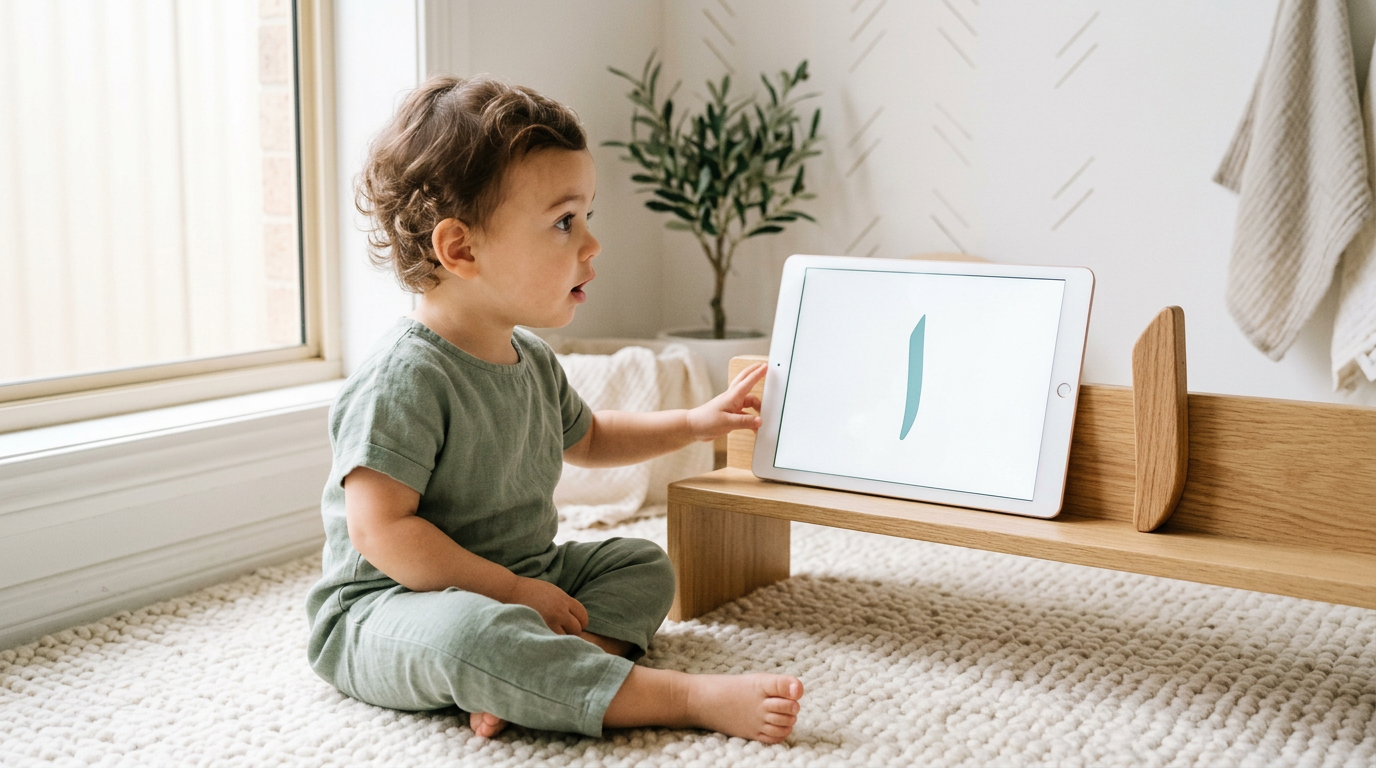
In this guide, we will share seven specific ways to nurture a foundational love for the language of the Quran. From tactile tracing for children as young as 2.5 years old to sophisticated multi-stage linguistic tools, we’ll show you how to bridge digital convenience with physical engagement. Let’s turn early literacy into a focused, beautiful journey of Tarbiyah for the next generation of the Ummah.
The Science of the Fitra: Why Age 0–3 is the Golden Window for Arabic
Your toddler’s brain is a linguistic powerhouse during their first 1,000 days. It acts as a spiritual sponge, absorbing the melodic rhythms of the Quran into their fitra. This window is a divine gift, allowing us to ground their identity in the Arabic language before the world’s noise intervenes.
We see this period as more than just memorization; it is about building a soulful connection to our heritage. By focusing on "Pure Screen Time," we protect their natural development from the chaos of mainstream platforms.
Nurturing Multi-Stage Linguistic Growth
The most effective way to support this growth is by matching biological readiness with structured tools. Advanced educational resources now offer up to seven distinct stages of linguistic progression to guide your child's journey. This structured path carefully transitions your little one from basic letter recognition to complex phonetics.
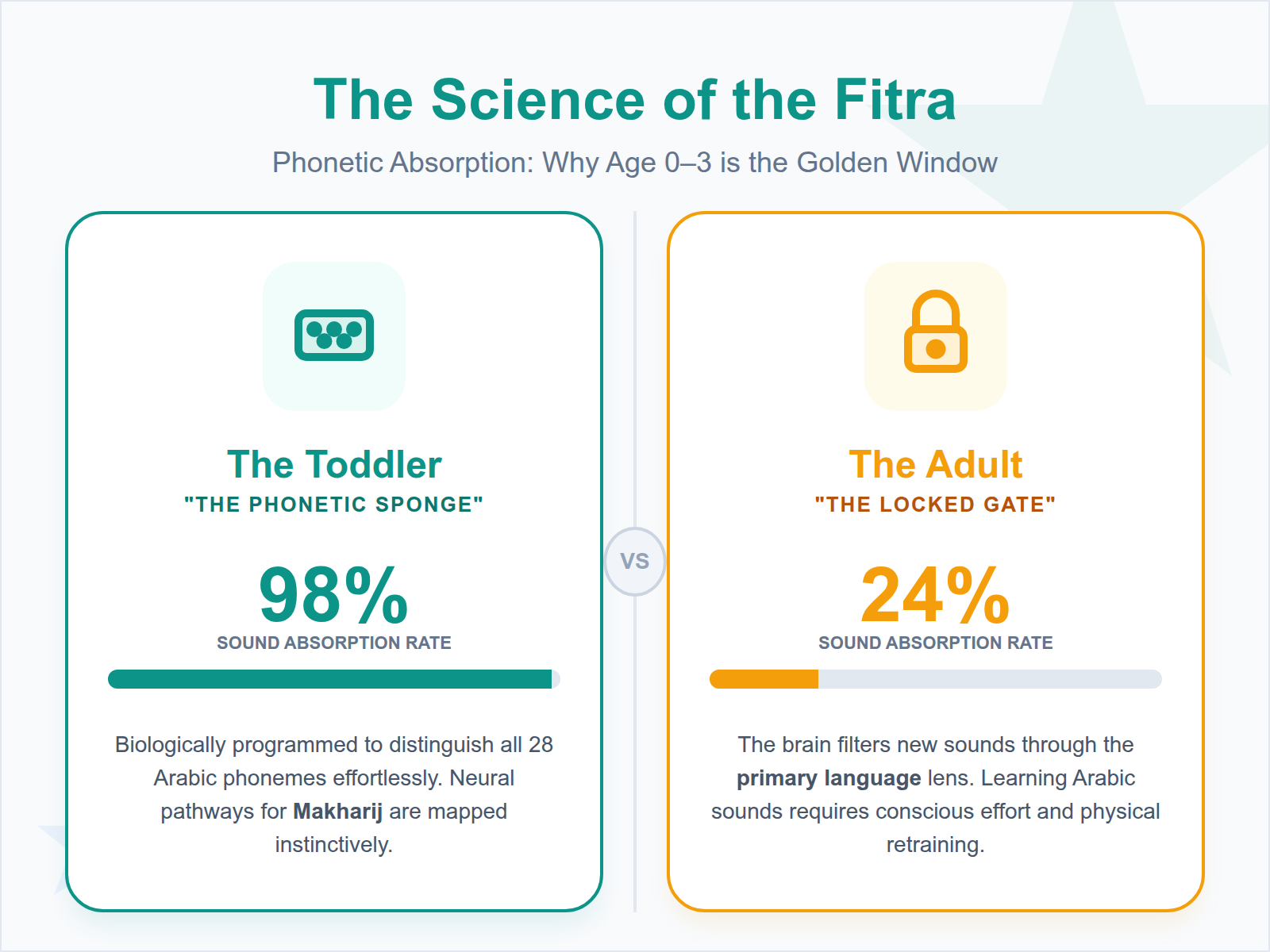
By age 18 months, your toddler’s brain enters a peak phonetic window where arabic alphabet learning for toddlers should prioritize "ear training." Introducing soft, clear pronunciations in a calm, ad-free environment helps them distinguish unique letters like Ha and Kha long before formal lessons begin. This calm phonetic foundation plants the seeds for a lifelong, loving relationship with the words of Allah.
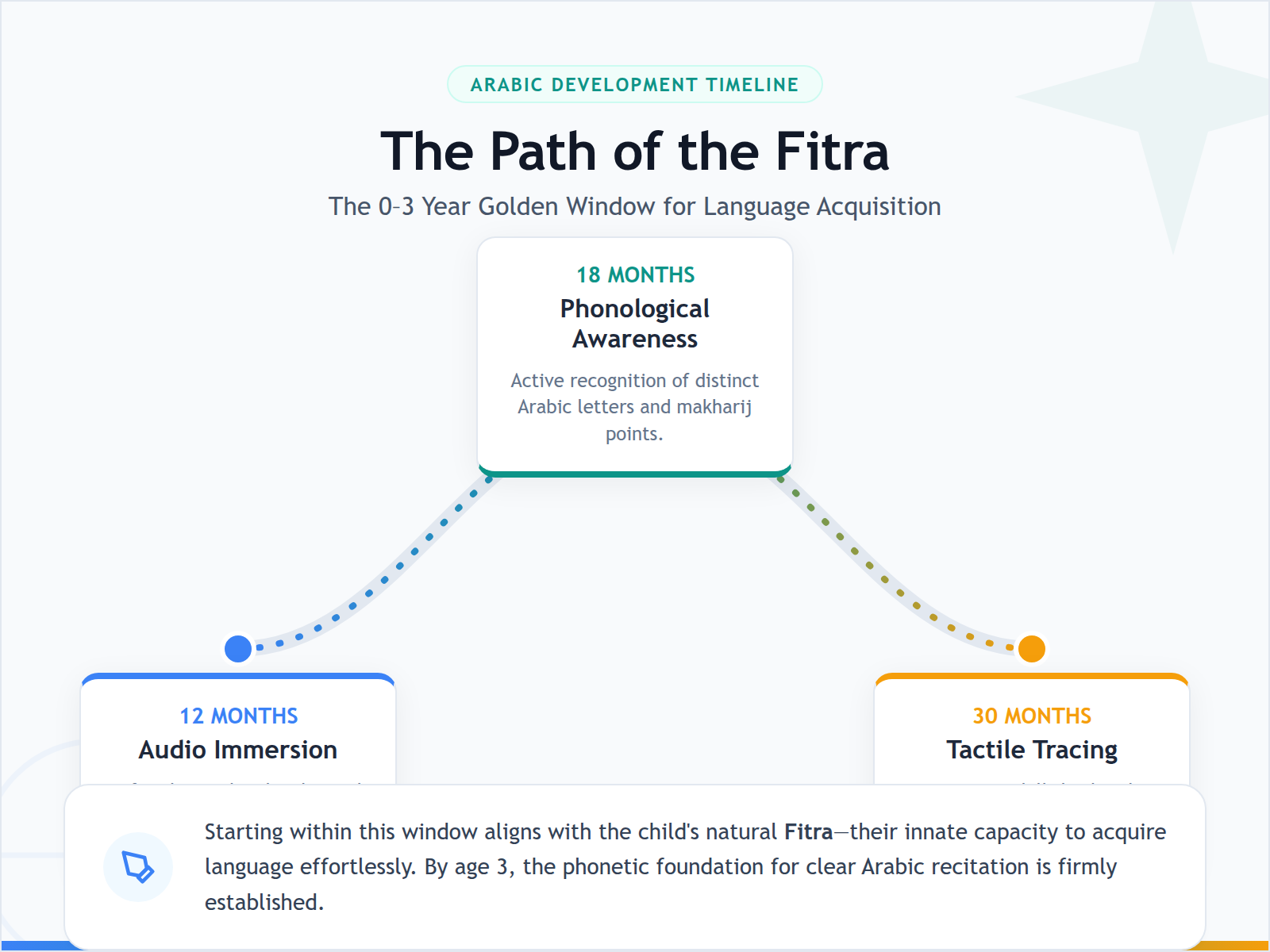
As your child transitions through these early years, their ability to pair digital recognition with physical play becomes a cornerstone of their Tarbiyah. We encourage a "low-stim, high-touch" experience that respects their neurological pace. This ensures their first encounter with the language of the Quran is one of peace and curiosity rather than overstimulation.
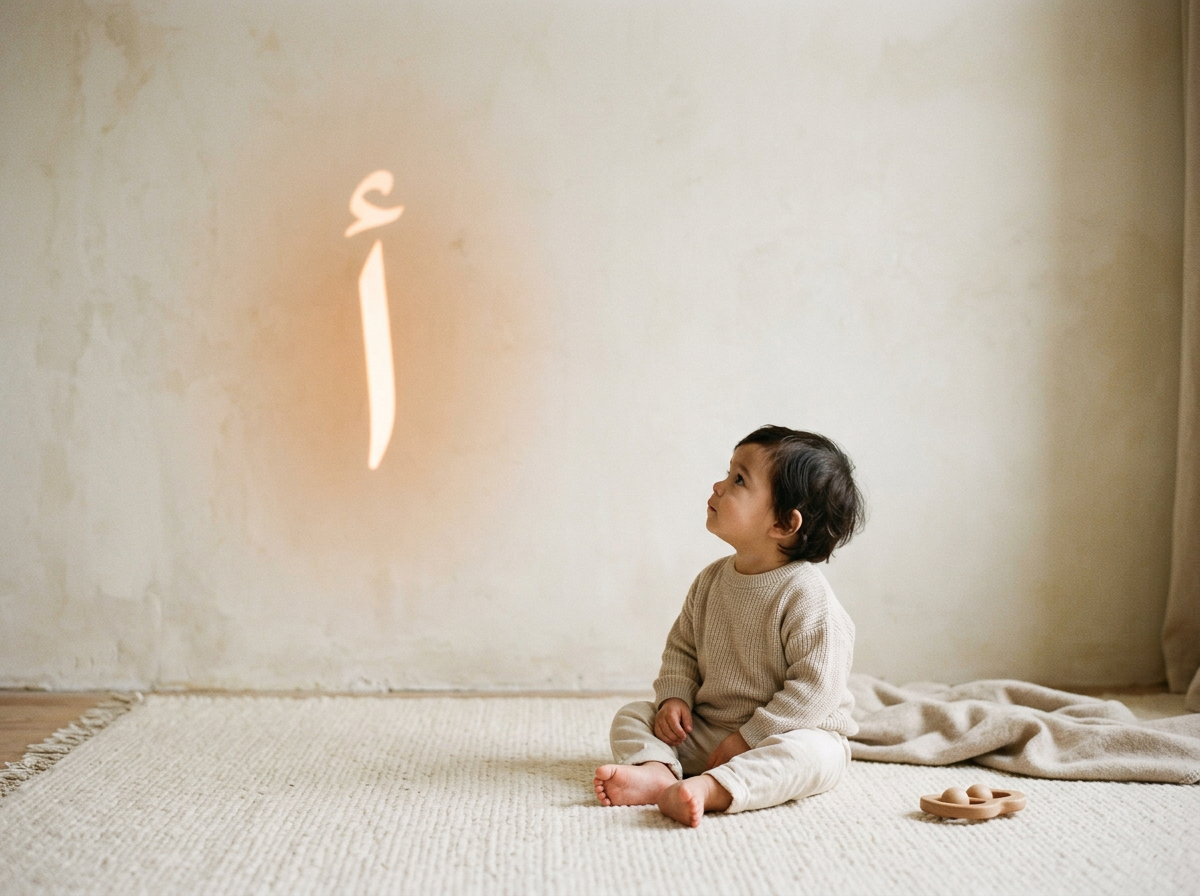
Parenting Tip: Create a "Sacred Space" for learning by removing noisy toys and silencing background notifications. A serene environment allows the natural rhythm of Arabic to resonate more deeply with your child's fitra.
Protecting this developmental journey is a sacred Amanah for every parent in our Ummah. By choosing "Gentle Arabic" tools, we ensure that arabic alphabet learning for toddlers remains a source of tranquility and digital hygiene. This principled approach allows the beauty of the Arabic script to settle into their hearts with ease.
Sensory Play: Bringing Letters to Life with 'High-Touch' Activities
We believe the most effective way to anchor a new letter in a toddler’s heart is through physical discovery. By bridging digital learning with tactile exploration, we honor your child’s Fitra and create a focused environment for their spiritual and cognitive development.
This "low-stim, high-touch" approach ensures that learning the language of the Quran remains a joyful, grounding experience for your family. It’s about more than just recognition; it’s about making the Arabic script a tangible part of their world.
Way 2: The Arabic Letter "Hide and Seek"
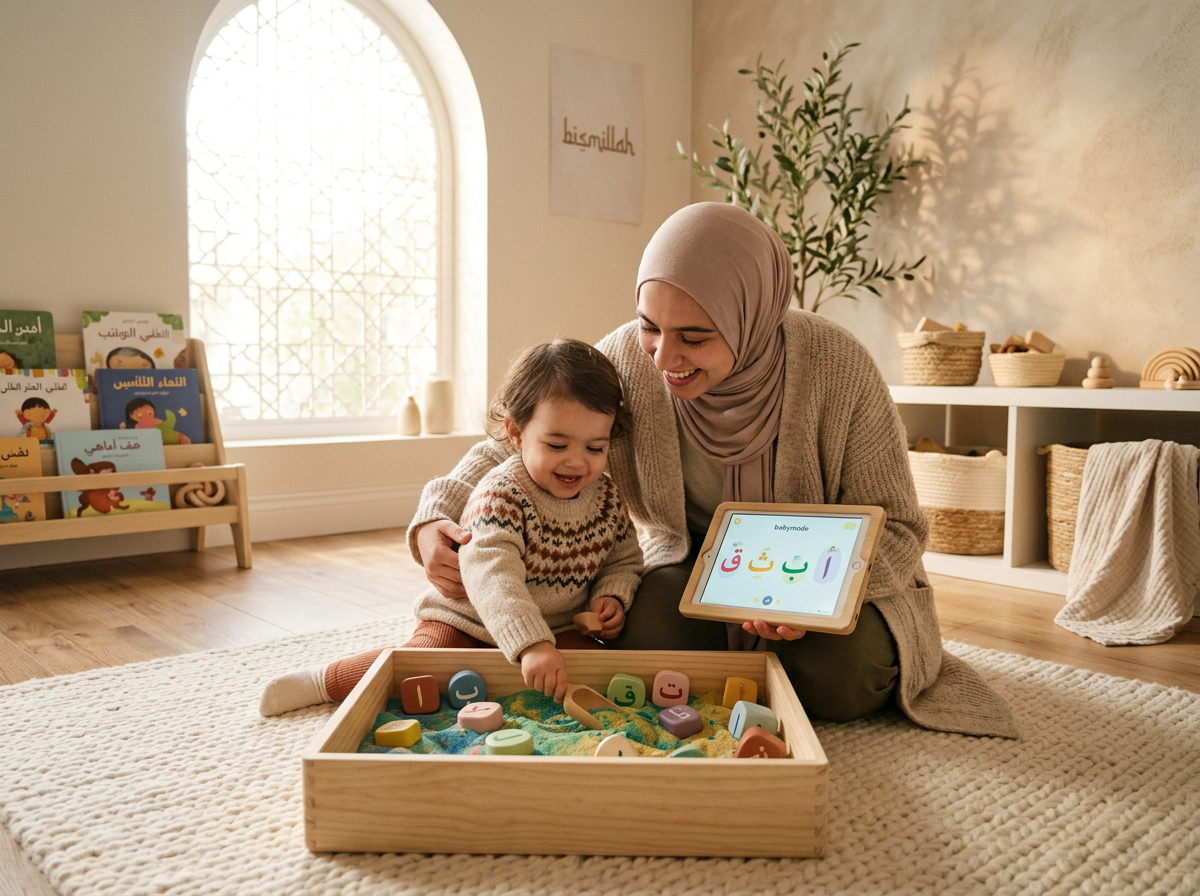
Sensory bins are among the most versatile arabic sensory play ideas because they turn a simple lesson into a joyful treasure hunt. Fill a shallow tray with dyed rice or smooth chickpeas, then hide wooden Arabic letters inside for your little one to "rescue."
This activity fosters natural curiosity while maintaining a serene, focused atmosphere in your home. Touching the physical weight of an Alif or Baa helps them internalize the letter's shape long before they begin formal writing.
This tactile feedback transforms a linguistic milestone into a restorative ritual that engages their senses in a low-stimulation environment. Using natural materials also protects your child from the "over-stimulation" often found in mainstream plastic toys.
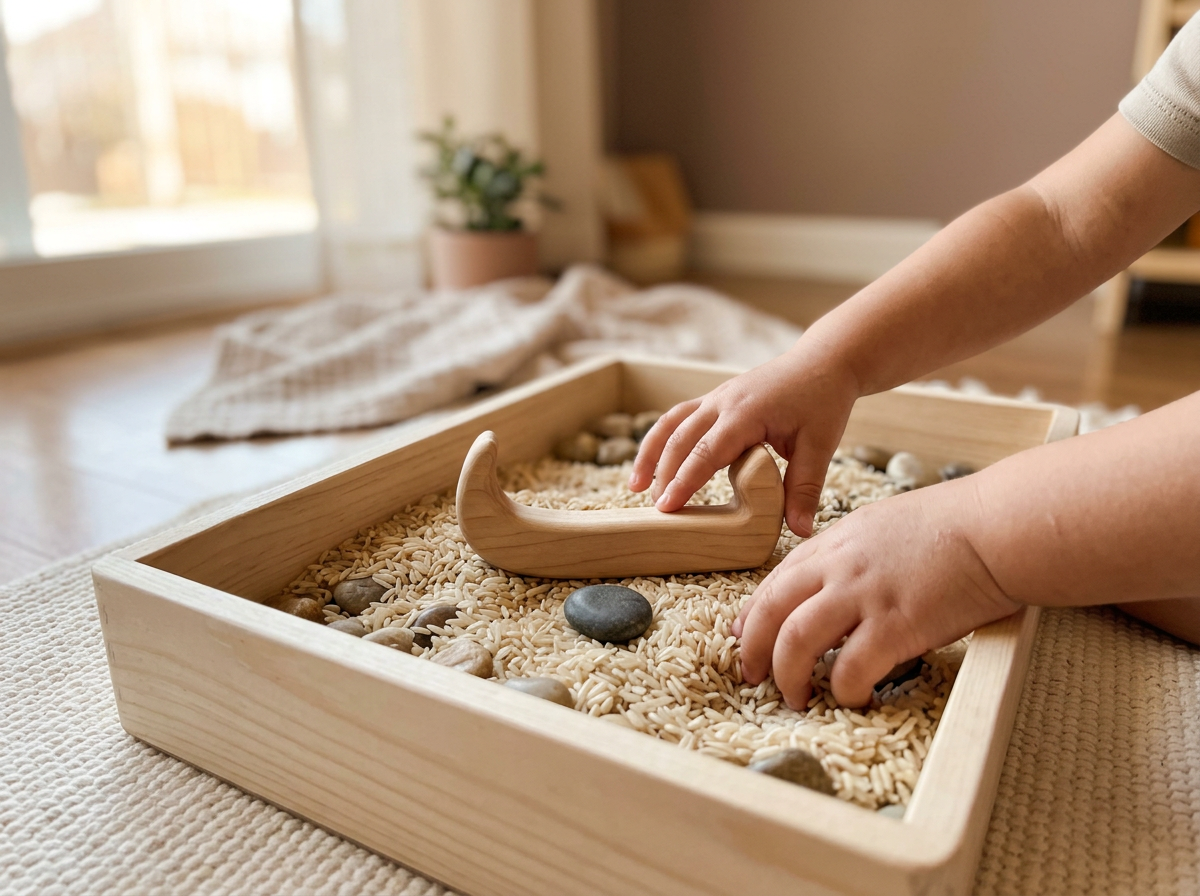
Parenting Tip: When your child is exploring sensory bins, sit beside them and repeat the letter sound softly. This creates a bonding moment that links the Arabic language to feelings of safety and parental love.
Way 3: Molding Masterpieces with Play Dough
Using play dough brings the alphabet into the 3D world, helping your toddler understand the unique curves and angles of each letter. You can encourage your little one to roll out dough "snakes" to form the shapes they’ve just seen in their AI-guarded safe space.
This hands-on approach builds your child’s confidence and familiarity with the script's unique architecture. Invite your toddler to mold the fluid curves of the Arabic script and use colorful pebbles for the nuqta (dots) on letters like Ba or Ta.
This practice sharpens their focus on the specific details of each character while building essential fine motor skills. It’s a beautiful way to make the process feel like a playful Sunnah, turning learning into a cherished family memory.
Way 4: Nature-Based Mnemonics and Interactive Tools
Connect abstract letters to the beautiful world Allah created by using tangible, nature-based associations. Pair a toy lion with Alif for Asad, or let them smell a fresh orange (Burtuqal) while identifying the letter Ba.
These fragrant and tactile cues help the brain map sounds to real-world objects in a way that feels organic and nurturing. To deepen this connection, you can integrate structured tools like Arabic Alphabet Talking Flashcards, which offer sophisticated, multi-stage learning paths.
By pairing these "high-touch" moments with your child’s Tarbiyah, you nurture a deep, lasting love for the language of the Ummah. This balanced approach ensures their digital and physical worlds work in harmony to build a strong linguistic foundation.
The 'Gentle Tech' Revolution: Ad-Free and AI-Guided Learning
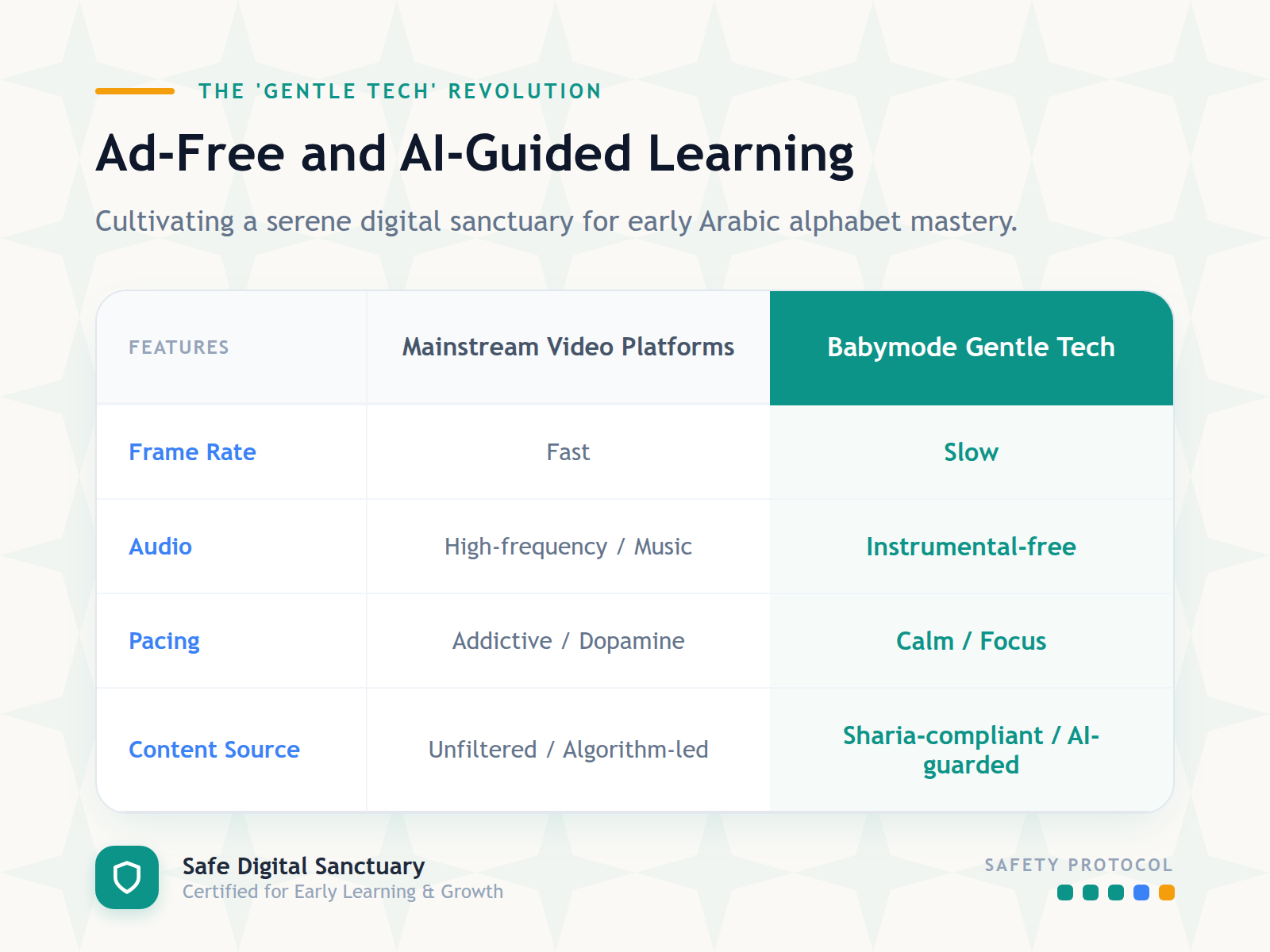
Transitioning to digital tools shouldn't sacrifice your child’s peace. We believe technology, guided by our shared values, can be a beautiful extension of your child's Tarbiyah. By choosing "Gentle Tech," you move away from the chaotic noise of mainstream platforms into a digital sanctuary cultivated for the youngest members of our Ummah.
Way 5: Prioritizing Pure Sound with 'No-Music' Environments
When introducing Arabic, clarity is vital for a developing mind. Mainstream rhymes often hide the nuances of letters behind high-tempo synthesized beats that can overstimulate a young child. By focusing on halal kids videos no music, you remove this auditory clutter, allowing your toddler to focus entirely on the Makhraj—the specific articulation points—of each letter.
This instrumental-free environment fosters a spiritual tranquility that aligns with the Sunnah of seeking calmness. Without percussive distractions, your child’s brain can better process the rhythmic beauty of the Quranic script. This leads to faster recognition and a more grounded, restorative learning experience for your family.
We’ve designed our audio-visual experiences to be "ear-friendly," prioritizing the natural human voice. This ensures that when your child hears a letter, it is crisp, clear, and unburdened by background noise. By honoring their Fitra in this way, we make the path to Quranic literacy a peaceful, natural progression.
Way 6: The AI-Guarded Safe Space
We’ve all seen the "screen-time tantrum" that happens when a device is put away after a high-energy session. Mainstream platforms use rapid cuts and algorithms that spike dopamine, making transitions back to play difficult for both parent and child. Our safe space acts as a digital Wali, ensuring every video is ad-free and stripped of addictive, overstimulating loops.
Our platform protects your child’s Fitra from the "wild west" of human-uploaded content and unpredictable autoplay features. This transforms screen time into a focused session that supports cognitive development rather than disrupting your child's inner equilibrium. By maintaining a slow, intentional pace, we help your little one stay regulated and curious.
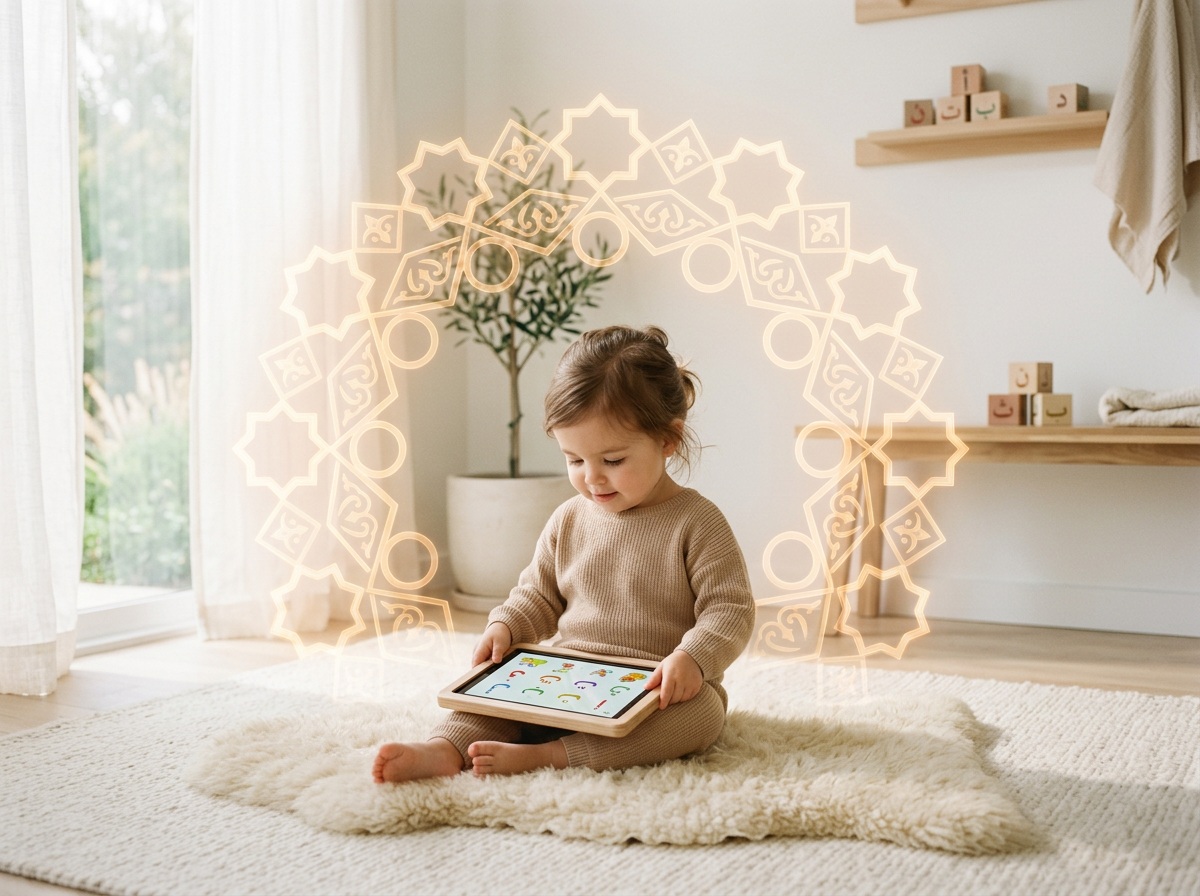
Our content-aware filtering ensures your child never encounters "surprise" ads or inappropriate thumbnails that clash with your family’s values. Instead of a source of anxiety, the screen becomes a tool for connection and quiet discovery for the whole family. You can step away for a moment, knowing their digital environment is as safe and wholesome as their own playroom.
Parenting Tip: To help your toddler transition from screen time to play, try "bridging" the activity. If they've just watched a video about the letter Jeem, have a physical wooden letter or a drawing of a Jamal (camel) ready to continue the learning journey off-screen.
Rhythm and Movement: Active Arabic Recognition for Busy Toddlers
For your toddler, learning isn't just a mental exercise—it’s a physical one. We recognize that movement is a child's first language, a beautiful expression of their Fitra.
By channeling their natural energy, you transform arabic letter recognition for babies into a joyful, full-body experience. This active approach honors your child's developmental needs and ensures their early Tarbiyah is grounded in purposeful play.
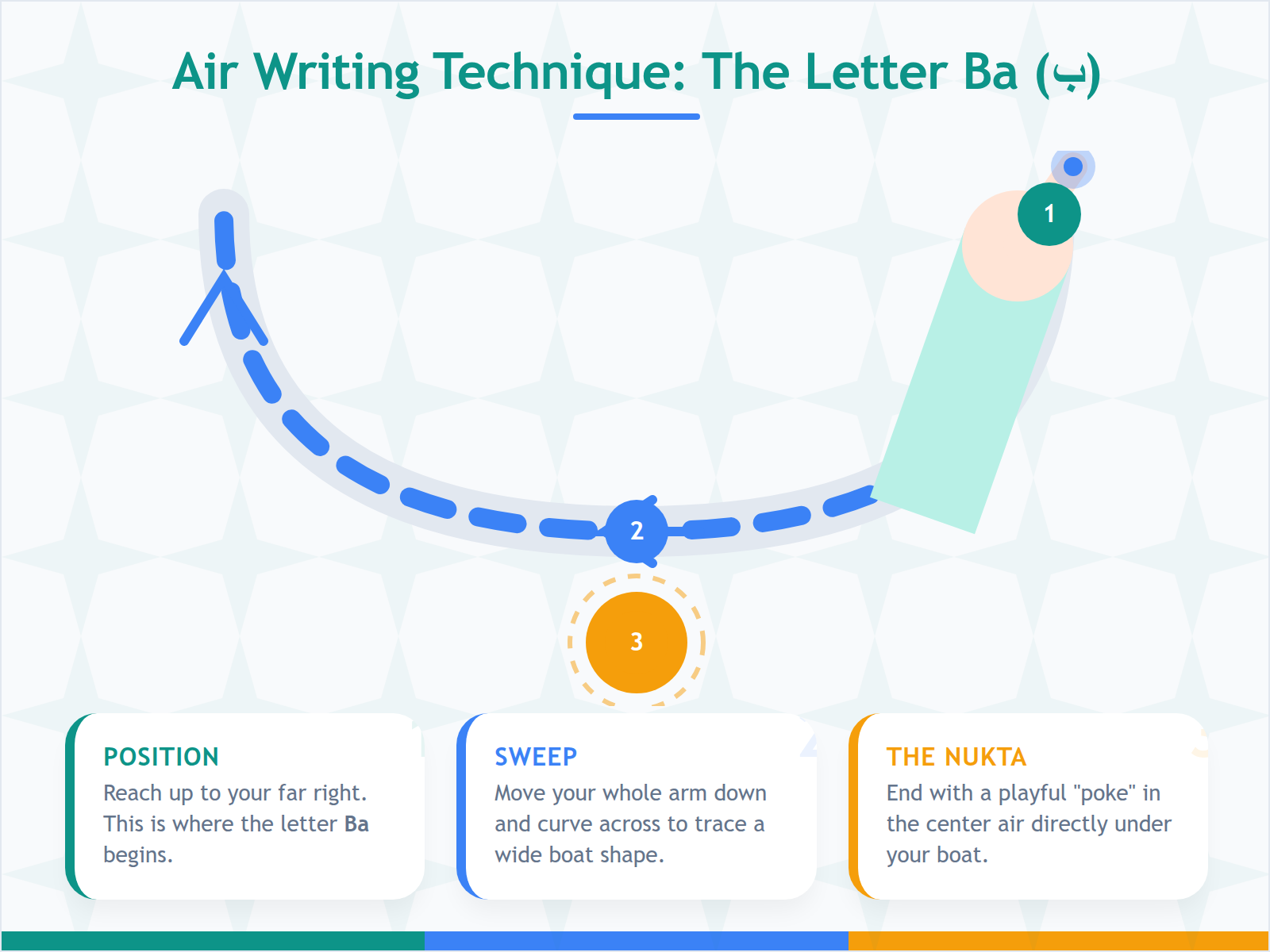
Way 7: 'Air Writing' for Gross Motor Memory
While fine motor skills are still maturing, your little one’s gross motor skills are expanding rapidly. You can leverage this by inviting them to use their whole arm to "draw" a giant Alif in the air.
These "big" movements help bridge the gap between digital exposure and physical mastery, providing a "low-stim, high-activity" balance. This movement engages proprioceptive memory, etching the letter's fluid curves into their muscles long before they’re ready for a pencil.
It turns a linguistic milestone into a restorative ritual that builds a deep connection to the language of the Ummah. By practicing "Air Writing" alongside our high-quality digital models, you provide the "Gentle Tech" scaffolding they need to thrive.
Way 8: Rhythmic Swaying and Sound
Rhythm is a core part of the Sunnah and the natural world Allah created. By introducing letters through rhythmic swaying or clapping, you align their learning with their internal pulse.
This creates a serene atmosphere where the Arabic script feels like a natural and beloved part of their daily life. When children involve their bodies, they aren't just memorizing symbols; they are experiencing the beauty of the Quranic script.
Advanced educational tools now offer structured, multi-stage learning paths that guide children from basic recognition to complex phonetics through physical interaction. This holistic engagement prevents the "brain fog" often associated with passive, high-stimulation media.
Instead, your home remains a sanctuary of active growth and spiritual discovery. By balancing digital tools with physical movement, you protect the Amanah of your child's well-being while building a lasting love for Arabic.
Parenting Tip: Just as air writing uses the arms to "feel" a letter's shape, you can engage the lower body for the same goal. Try "marching" to the rhythm of the Arabic alphabet—taking one firm step for every letter to associate the language's pace with your child's steady heartbeat.
The Daily Routine: Micro-Learning and Digital Tarbiyah
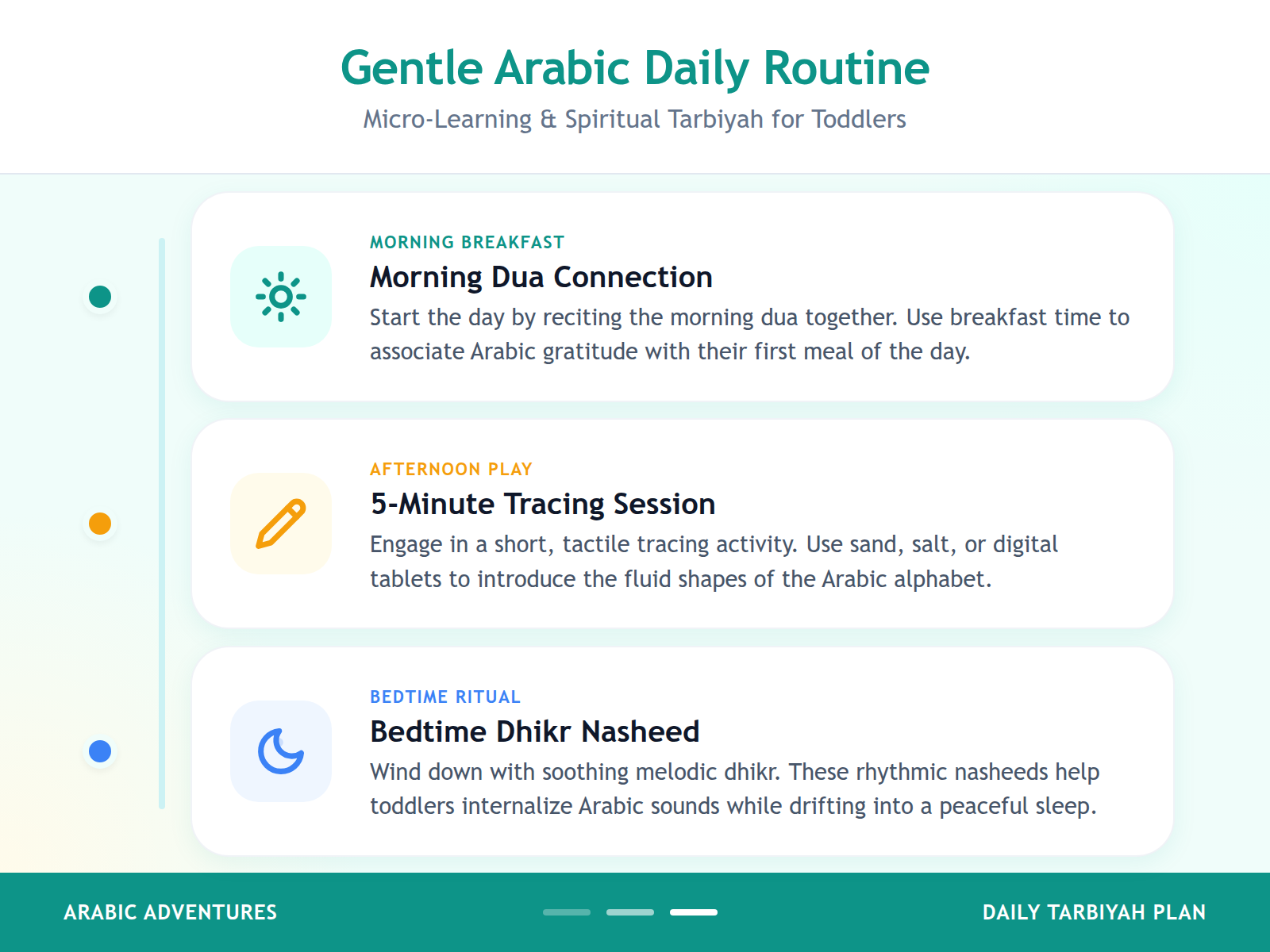
We believe the secret to meaningful islamic preschool learning activities isn't an exhausting hour-long lesson; it's the steady power of a 10-minute habit. We've found that weaving the activities we've discussed into your family rhythm—like a quiet 'Arabic Morning' during breakfast—creates a natural spiritual flow. When you anchor the language of the Quran to these daily moments, learning becomes a lifelong act of gratitude for your child's Fitra.
Establishing a Rhythm of Sakinah
To protect your child's peace, prioritize low-arousal, ad-free content during key transitions like the post-nap window or before the evening meal. By choosing these "Gentle Tech" moments, you create a sanctuary that honors both modern developmental needs and the timeless value of Sakinah within your home. This approach ensures that digital exploration remains a source of calm rather than overstimulation.
Nurturing Growth through Observation
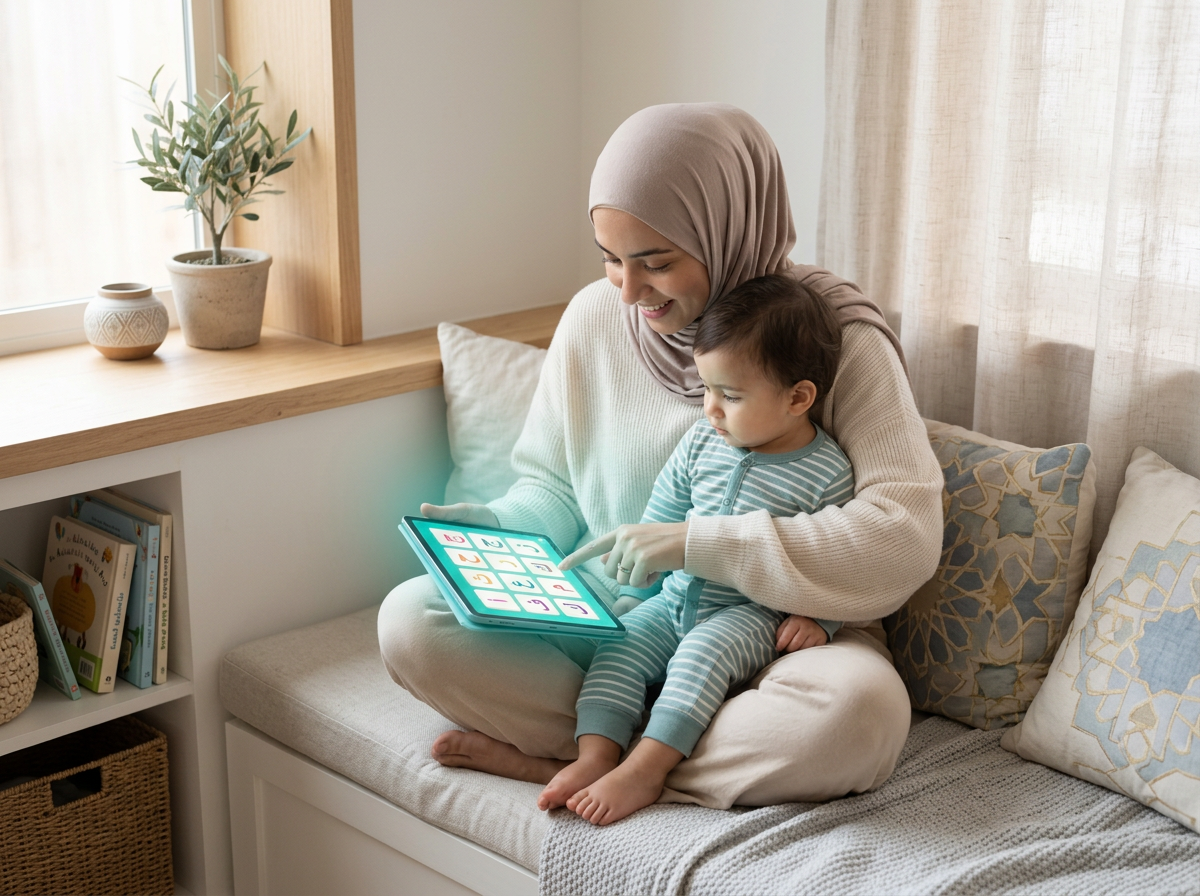
We encourage you to observe your child's unique journey through the beauty of the Arabic language as a heart-centered Tarbiyah. Research shows that children as young as 2.5 years old demonstrate automatic tracing behavior when presented with tactile Arabic letter cards. You can celebrate these small wins at a restorative pace that respects your child’s natural developmental clock.
Sophisticated interactive tools now offer up to seven distinct stages of linguistic progression to guide your little one. These structured, multi-stage learning paths, such as those used with Arabic Alphabet Talking Flashcards, help transition your child from basic recognition to complex phonetics. By documenting these milestones, you transform simple screen time into a meaningful record of their spiritual and cognitive growth.
Parenting Tip: The Morning Dhikr
Try starting your digital session with a simple shared Bismillah. This small ritual signals that screen time is a purposeful journey of discovery, grounding their tech experience in faith from the start.
Strategies for a Bilingual Ummah
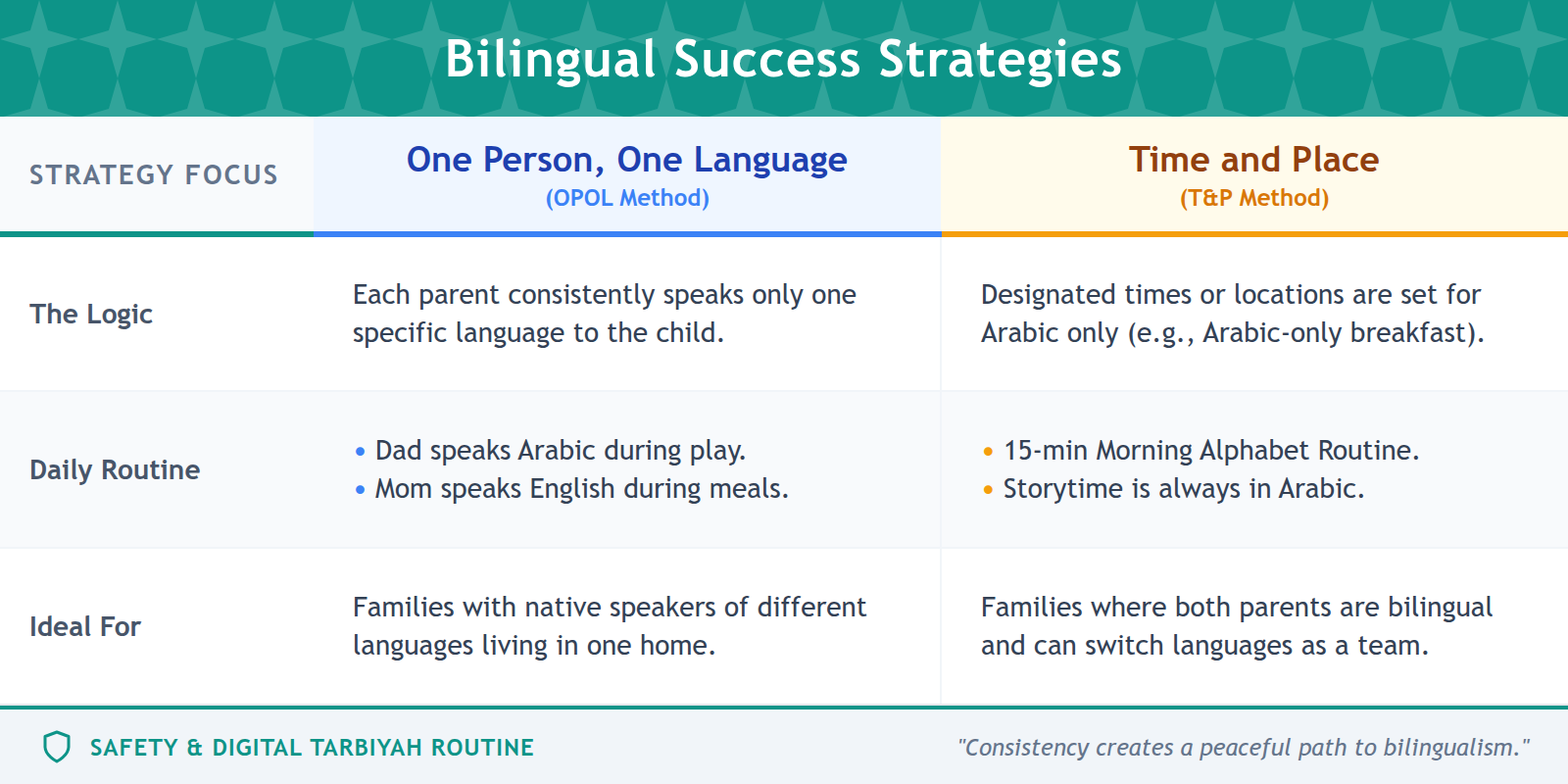
While Babymode provides a guarded space, your home flourishes when you choose a consistent strategy for your bilingual journey. Methods like 'One Person, One Language' (OPOL) or 'Time and Place' help toddlers distinguish between languages without cognitive overwhelm. These frameworks ensure your child moves through their linguistic journey with a steady hand, making the language of the Ummah feel like a native gift.
Consistency in these daily routines helps your toddler feel secure and confident as they navigate multiple languages. This intentionality ensures that Arabic becomes the heartbeat of your household, fostering a deep and lasting connection to our shared heritage. By grounding their digital use in these structured methods, you protect your child's Amanah while building a bridge to the Quran.
Conclusion
The "Gentle Arabic" approach is all about harmony! By pairing tactile sensory play with Babymode’s safe AI platform, you create a nurturing ecosystem for arabic alphabet learning. This rhythmic balance protects your child’s fitra while building essential linguistic blocks.
Imagine the joy of seeing your child connect with the Quran’s language through peaceful discovery. In our experience, this synergy creates a beautiful foundation of Sakinah. This is the "Gentle Arabic" payoff: a child who loves to learn and a parent who feels truly empowered.
Ready to begin? Explore Babymode’s ad-free, halal content library today and reclaim your toddler's digital journey!
Frequently Asked Questions
Is 18 months too early for Arabic sounds?
No, it's the "golden window" for their Fitra. Focus on auditory immersion and rhythmic sounds rather than high-pressure visual drills.
How do I teach if I'm not a native speaker?
Try "co-learning" together. Use AI-guided tools for perfect pronunciation, allowing you to bond through Tarbiyah without needing to be an expert yourself.
How can I avoid overstimulating videos?
Choose low-arousal, rhythmic content. Pair digital learning with tactile play to keep arabic alphabet learning calm and grounded in Sakinah.
Are there ad-free alternatives to YouTube?
Yes! Babymode offers an ad-free sanctuary for the Ummah. Our "Gentle Tech" approach ensures your child’s digital environment remains pure and focused.
How long should my toddler practice daily?
Aim for 10-minute "micro-sessions." These short, consistent bursts protect your child's peace while building a beautiful foundation for their future.