At its heart, a cause and effect toy is anything that responds directly and immediately to what your child does. The simplest example is a rattle. Your baby shakes it (the cause), and it makes a fun noise (the effect). This simple interaction is one of the first ways your little one learns they can make things happen in the world around them.
Why This Simple Idea Is a Huge Milestone
From their very first breath, babies are busy figuring out the world Allah (SWT) has created. A cause and effect toy is one of their earliest tools for shifting from being a passive observer to an active participant. It’s like their first science experiment, teaching them the powerful lesson: “When I do this, that happens.”
This simple discovery is a massive leap forward in their cognitive development. You can almost see the little switch flip in their brain as they realize they can influence their surroundings. This newfound agency is incredibly empowering, building a sense of security and confidence. They learn that their actions matter—a principle that will one day help them understand everything from pressing a button to making choices that please Allah (SWT).
The Foundation for Future Learning
Grasping the idea of cause and effect is absolutely critical for your child's growth. It lays the groundwork for more complex skills they’ll need later on, from speaking to solving problems. This early understanding helps them:
- Develop Critical Thinking: They start to predict what will happen next, which is the very beginning of logical reasoning. They learn, for example, that dropping a spoon from the highchair will always result in a loud clang on the kitchen floor.
- Build Communication Skills: A baby quickly learns that when they coo or cry, you respond. This is a social form of cause and effect that teaches them the back-and-forth rhythm of conversation.
- Foster Curiosity: When children see that their actions create interesting results, it naturally encourages them to explore, experiment, and wonder about how things work.
The concept of cause and effect is more than just playtime; it's the beginning of understanding consequences, making connections, and recognizing one's own role in the world. It’s a vital step towards raising a thoughtful and engaged little Muslim.
As parents everywhere look for more meaningful ways to play, it's no surprise that the global demand for educational toys is soaring. The toy market is projected to hit $349.15 billion by 2035, a trend largely driven by an increase in developmental products. You can explore more insights on these market trends to see just how much play is evolving.
When you choose a good cause and effect toy, you're doing more than just buying an object; you're investing in the very building blocks of your child’s intellect and confidence.
Here's a quick look at how these skills build on each other as your child grows.
How Cause and Effect Play Supports Development
| Age Group | Key Skill Developed | Toy Example |
|---|---|---|
| 0-6 Months | Sensory Awareness | A soft rattle that makes a gentle sound when shaken or a crinkle toy that rustles when squeezed. |
| 6-12 Months | Object Permanence | A pop-up toy where pressing a button makes an animal appear or a ball-drop toy. |
| 1-2 Years | Problem-Solving | A shape sorter that requires matching the right block to the right hole or a simple puzzle. |
| 2-3 Years | Logical Sequencing | Stacking rings that need to be placed in order or a toy cash register with buttons that open the drawer. |
As you can see, the toys get more complex, but the core lesson—"my action created a reaction"—remains the same, deepening their understanding at every stage.
Finding the Right Toy for Each Developmental Stage
Choosing a cause-and-effect toy that’s just right for your child’s age is the secret to making playtime both fun and meaningful. Just like we wouldn’t expect a baby to run before they can crawl, their toys need to meet them exactly where they are. This approach keeps frustration at bay and nurtures their natural curiosity, helping them build confidence one small discovery at a time.
At its core, cause-and-effect learning follows a beautifully simple and powerful sequence.
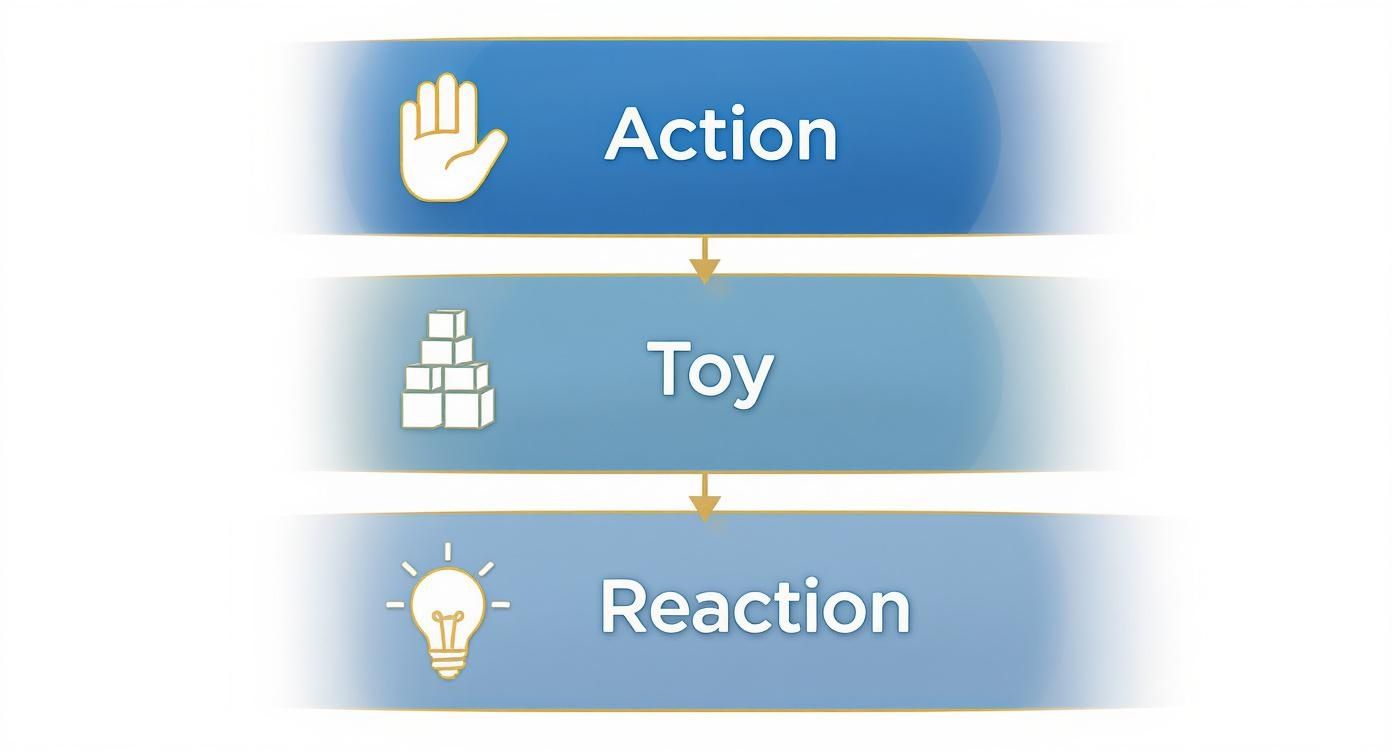
This little diagram shows it all: your child’s simple action creates a direct reaction from the toy, which sparks a brand-new understanding in their rapidly developing mind.
Age-Appropriate Cause and Effect Toy Guide
To make it easier, I've broken down the best types of toys for each stage, from those first sensory discoveries as a newborn to the more complex problem-solving of a two-year-old. This guide is designed to help you find options that are not only developmentally spot-on but also align with a peaceful, faith-centered home.
| Age | Developmental Focus | Recommended Toy Types | Parenting Tip |
|---|---|---|---|
| 0–12 Months | Simple Sensory Discovery | Soft rattles, crinkle books/mats, play gyms with hanging toys. These offer immediate sensory feedback (sound, texture) for accidental or emerging intentional movements. | Focus on toys that reward even the slightest touch or shake. Your baby is learning, "When I move, something happens!" |
| 1–2 Years | Purposeful Play & Problem-Solving | Stacking rings, shape sorters, simple ball drop toys. These require more deliberate action and introduce concepts like matching, size, and object permanence. | Encourage trial and error. Let them figure out why the square peg won't fit in the round hole. This builds resilience. |
| 2–3 Years | Complex Connections & Sequencing | Pop-up toys, simple 2-4 piece puzzles, toy instruments (xylophone/drum). These toys introduce multi-step actions and the idea that different actions create different results. | Narrate their play: "You pushed the blue button, and the lion popped up! What happens if you turn the yellow dial?" |
Ultimately, the goal is to provide a "just-right" challenge that empowers your child. When a toy is too simple, they get bored; when it’s too complex, they get frustrated. Finding that sweet spot is where the magic happens.
From Birth to 1 Year: Simple Sensory Discoveries
In that precious first year, your baby’s entire world is built on sensory exploration. Their movements are just starting to become intentional, so the best toys are ones that offer an immediate and clear reward for their efforts. Think simple, gentle, and direct.
These toys don’t need to be flashy or noisy. In fact, a quiet, calm home environment is often far more helpful for a baby who is just beginning to process sights and sounds.
- Soft Rattles: When your baby accidentally (and later, on purpose!) shakes their hand, a soft rattle provides a gentle sound. This is often their very first lesson in cause and effect.
- Crinkle Books or Mats: The sound and texture of a crinkly material reward even the slightest touch. It’s perfect for tiny hands that are just learning to grasp and explore.
- Play Gyms: A simple play gym with hanging toys is fantastic for encouraging your baby to bat and kick. When they make contact and the toy jiggles or makes a soft noise, they learn about their own physical power.
This stage is all about connecting a movement to a sensory result. The link has to be obvious and instant for your baby to make the connection: "My hand moved, and I heard a sound!"
These simple actions are also wonderful for building core strength and focus. For more ideas on making the most of this phase, check out our guide on choosing a great tummy time toy.
From 1 to 2 Years: Purposeful Play and Problem-Solving
As your baby grows into a toddler, their hand-eye coordination improves dramatically. They are no longer just exploring sensations; they are actively starting to solve simple problems. This is the perfect time for toys that require a bit more thought and precision.
You'll notice their actions become more deliberate as they work to figure out how things fit together.
- Stacking Rings: Placing rings on a post isn't just a motor skill—it teaches size, order, and the consequence of stacking them incorrectly. They'll quickly learn that out-of-order rings look wobbly or won't fit at all.
- Shape Sorters: This classic toy is a clear lesson in trial and error, which is a fundamental part of problem-solving. It challenges your toddler to match a shape to its corresponding hole.
- Simple Ball Drop Toys: Dropping a ball into the top and watching it spiral down before reappearing at the bottom is absolutely fascinating for this age group. It reinforces the concept of object permanence and shows a predictable, repeatable outcome.
From 2 to 3 Years: Exploring More Complex Connections
By age two, your toddler is ready for more intricate challenges. Their thinking is becoming more sophisticated, and they can now understand multi-step processes.
This is a wonderful time to introduce toys that involve sequencing, memory, and recognizing that different actions lead to different outcomes.
- Pop-Up Toys: These are brilliant for this stage. They often require a specific action—like pushing a button, turning a dial, or sliding a lever—to make a little character pop up. This teaches them that different inputs produce different results.
- Simple Puzzles: Starting with 2-4 large, chunky pieces, puzzles help toddlers understand how individual parts come together to create a whole. It’s a tangible lesson in logic and spatial awareness.
- Toy Instruments: A small drum or a simple xylophone clearly demonstrates that hitting different spots creates different sounds. This introduces a more nuanced understanding of cause and effect, where the "cause" can be varied to change the "effect."
How to Choose Safe and Faith-Aligned Toys
For Muslim parents, choosing a toy is more than just picking something fun. It's about carefully considering what we bring into our home and into our child's world. A great cause and effect toy needs to do more than just entertain—it must be safe for your little one's body and soul. This means we have to look past the shiny packaging and bright colors to focus on quality, safety, and whether it truly fits with our family's values.
Standing in a toy aisle or scrolling online, the options can feel endless and even a bit overwhelming. But if you keep a few core principles in mind, you can navigate the choices with confidence and find toys that will truly nurture your child.
Prioritizing Physical Safety
First things first: a toy absolutely must be safe. Babies and toddlers learn about the world with their hands and mouths, so the materials they are constantly touching and tasting are incredibly important.
Here’s a simple checklist to run through:
- Check the Materials: Actively look for labels like BPA-free plastics, non-toxic paints, and food-grade silicone. Natural materials are often a wonderful alternative; think solid wood that's been smoothly sanded or soft, organic cotton.
- Ensure Durability: Give the toy a good look-over. Are there any small bits that could snap off and become a choking hazard? A well-made toy is built to survive being dropped, chewed on, and loved with all the enthusiasm a toddler can muster.
- Test the Size: Here’s a handy trick: if a toy or any part of it can fit through a toilet paper tube, it’s a potential choking hazard for a child under three. It's a simple test that can prevent a serious accident.
Choosing a safe toy is an act of care that protects your child’s well-being. It gives you peace of mind, allowing you to relax and enjoy playtime together, knowing they are in a secure environment.
Aligning with Faith and Family Values
Beyond just physical safety, we want our children's toys to add something positive to the atmosphere of our home. For many Muslim families, this means being mindful of the kinds of images and sounds we invite into our living space.
- Mindful Imagery: A lot of parents prefer to steer clear of toys with detailed faces of humans or animals. The good news is, there are so many beautiful options out there! Abstract toys, geometric shapes, and items inspired by nature all fire up a child's imagination without relying on character imagery.
- A Calm Environment: Let's be honest, some electronic toys are just too much. The constant flashing lights and loud, repetitive music can easily overstimulate a little one and disrupt the calm we try to create, especially around prayer times or naps. Look for toys with gentle sounds or, even better, no sounds at all. This lets your child provide the soundtrack.
- Simplicity and Purpose: Often, a simple set of wooden stacking rings holds more developmental magic than a complex electronic gadget. These kinds of open-ended toys encourage your child to focus, solve problems, and use their own creativity—skills that will benefit them for a lifetime.
By focusing on these principles, you can curate a toy collection that is safe and educational while also reflecting the calm, intentional, and faith-centered home you're building for your family. For more ideas on this topic, check out our guide on finding halal entertainment for babies.
Creative Cause and Effect Play Without Toys
Believe it or not, the most powerful cause and effect toy in your child’s world isn't a toy at all—it’s you. That wonderful "if I do this, then that happens" discovery is woven right into the fabric of your daily life and Islamic routines. These moments are rich with learning, cost nothing, and deepen the bond you share.
Think about it: long before your baby can even grasp a rattle, they learn a profound lesson. When they cry, you come. This is their very first, and most important, understanding of cause and effect. It teaches them not just that their actions get a response, but that their needs will be met with love and care. This is the bedrock of their security.
Everyday Moments Full of Learning
You don’t need an overflowing toy box to teach these critical concepts. Your home is already a perfect learning lab, filled with gentle, natural opportunities to explore action and reaction.
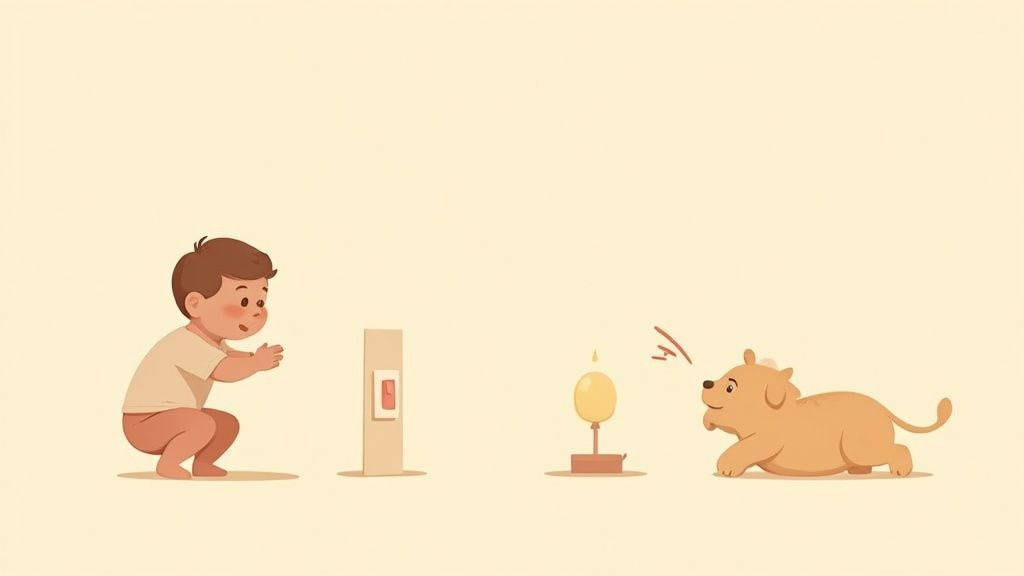
- In the Kitchen: Let your little one flick a light switch with you. On, off. Light, dark. It's a simple action with an immediate, clear result that absolutely fascinates young minds.
- During Wudu: The sound and feel of running water is a powerful sensory experience. Let them feel a few drops, showing them how turning the tap makes the water flow and stop. They see that an action controls the water.
- At Prayer Time: Even the rustle of the prayer mat as you unroll it, or the soft thud it makes on the floor, is a small lesson. Their senses connect the sound and sight with the beautiful act of Salah that follows.
The most meaningful learning happens inside loving relationships and daily routines. When your child sees you respond to them and watches you interact with the world, they are absorbing foundational lessons about how things work.
Timeless Games Are the Best Teachers
Some of the best ways to teach cause and effect have been passed down for generations. These simple, interactive games are brilliant because they build connection and cognitive skills at the exact same time.
- Peek-a-Boo: When you hide your face and then reappear with a smile, you’re not just playing. You’re teaching your baby about object permanence and the joyful effect of your return.
- Clapping Hands: Show your toddler how to bring their hands together to make a sound. The combination of their own movement creating a noise is a delightful discovery for them.
- Singing Nasheeds with Actions: Simple songs that involve hand movements (like opening and closing fists) directly link an action to a lyrical idea, reinforcing that connection in a fun, rhythmic way.
These no-cost activities are so powerful because they are deeply interactive and relational. They put you, the parent, right at the center as your child's first and most important teacher. This hands-on approach aligns beautifully with educational philosophies that value real-world learning, which you can read more about in our guide to creating a Montessori-inspired Muslim home.
Balancing Hands-On Play in a Digital World
Let's face it: figuring out screen time is one of the biggest challenges for parents today. We all have those moments when we desperately need two free hands—whether it's to get dinner on the table before Maghrib, focus during Salah, or just tend to another child. It's easy to feel a twinge of guilt, but it’s more helpful to think about technology with intention, not just fear.
https://www.youtube.com/embed/3xS01S2QIDM
It’s important to remember that not all screen time is the same. There's a world of difference between a child zoning out to a chaotic, over-the-top cartoon and interacting with a well-designed app. Some quality digital tools are actually built on that same cause-and-effect principle, where your child's tap or swipe makes something predictable happen on screen.
Still, even the best apps can't replace real, hands-on play. Nothing can. The sensory feedback a child gets from tangible toys—the solid weight of a wooden block, the crinkly texture of a soft book, the challenge of fitting a ring onto a post—is something a flat screen just can’t deliver.
Setting Healthy Boundaries with Screens
If you're going to use technology as a tool (and sometimes, you just need a tool!), the key is to set clear and consistent boundaries. This is what protects your child's development and keeps hands-on discovery as the main event in your home.
Here are a few practical tips that work for many families:
- Set Firm Time Limits: Decide what feels right for your child's age and stick to it. A visual timer can be a toddler's best friend, helping them see when screen time is over and making the transition much smoother.
- Prioritize Co-Playing: When you can, sit with your child during their screen time. Point things out, ask simple questions ("What sound does the cow make?"), and turn it into a shared activity instead of a solo one.
- Create Screen-Free Zones: Make certain areas or times of day totally screen-free. The dinner table and bedrooms are great places to start. This protects precious family connection and helps build healthy sleep habits.
The goal isn’t to banish technology forever. It's to keep it in its place as a helpful assistant, not the main entertainer.
At the end of the day, nothing is more powerful for your child's learning than you are—your voice, your attention, and the real-world experiences you share together. By keeping hands-on play at the center and using digital tools thoughtfully, you can create a balanced, nurturing home that reflects what your family truly values.
Your Questions on Cause and Effect Toys, Answered
As you start exploring toys for your little one, it's natural for questions to pop up. You want what's best for their development, but you also want to make choices that feel right for your family and your faith. Let’s walk through some of the most common questions parents have about cause-and-effect toys.
Are Expensive Electronic Toys Better Than Simple Ones?
Honestly? No, not at all. In fact, when it comes to a young, developing mind, simpler is often much, much better.
The whole point of a cause-and-effect toy is to make the connection between an action and its reaction crystal clear. Think about a set of wooden blocks. When your child pushes them over, they make a satisfying clatter. The lesson is immediate and easy to understand.
Many electronic toys, on the other hand, can be a sensory overload with all their flashing lights and loud, repetitive sounds. This can easily overwhelm a baby or toddler, making it harder for them to grasp that core "I did that!" concept.
Simple, battery-free toys like stacking rings or a classic shape sorter invite your child to bring their own creativity to the table. They help create a calmer, more focused play environment, which is something many families are looking for, especially when trying to keep a peaceful home.
This focus on simplicity empowers your child to be the one making things happen, rather than just being a passive audience for a toy's performance.
My Toddler Gets So Frustrated with Their Shape Sorter. What Should I Do?
First, take a deep breath. It’s okay! Frustration is a completely normal—and even healthy—part of the learning process. It’s a sign that your child is genuinely trying to figure something out. Their little mind is working hard, and that's exactly what we want.
Instead of taking the toy away, think of this as a beautiful teaching moment.
- Show them how it's done. Get down on the floor with them and slowly model how a shape fits. Talk them through it in a calm voice: "Look, here's the circle. Let's find the circle hole... There it goes!"
- Make it easier. Don't overwhelm them with all the pieces at once. Start with just one shape and its matching hole. Once they’ve got that down, you can introduce a second one.
- Praise the effort, not just the win. A simple, "You're trying so hard, masha'Allah!" goes a long way in building their confidence and resilience.
This approach is a wonderful way to practice the Islamic value of sabr (patience). By gently guiding them through a challenge, you’re not just teaching them how to use a toy—you’re teaching them how to persevere.
How Can I Find Toys That Don’t Have Faces or Characters?
This is a really important consideration for many Muslim families, and the good news is, there are tons of fantastic options out there. You just need to know what to look for.
A great starting point is to search for toys inspired by educational philosophies like Montessori or Waldorf. These approaches naturally lean toward natural materials and abstract forms to spark a child’s own imagination.
Try using search terms like these:
* "Wooden stacking toys"
* "Geometric shape sorters"
* "Abstract building blocks"
* "Sensory blocks"
You’ll find that these toys are not only beautiful and align with specific religious preferences, but they are also incredibly open-ended. In your child’s hands, a simple block can become a car, a house, or a telephone—fostering far more creativity than a toy that's already defined as a specific character.
When Is the Right Time to Introduce My Baby to These Toys?
You can start planting the seeds of cause and effect much earlier than you might think! The sweet spot is usually around 3-4 months old, right when your baby begins to grasp objects with real intention.
A perfect first toy is a simple, lightweight rattle. That very first time your baby accidentally shakes their hand and hears that soft little sound, a lightbulb goes off in their brain. They learn, "Hey, I made that happen!"
As they get bigger and have more control over their movements, you can introduce other simple toys. A soft crinkle book they can pat during tummy time or a play gym with hanging toys they can bat at are perfect next steps. The most important thing is to just follow your child's lead. And remember, your interaction—your smile, your encouraging voice—is the magic ingredient that truly brings the learning to life.
Ready to introduce your little one to a world of safe, faith-aligned learning? Babymode offers a halal, ad-free screen time experience designed for Muslim children aged 0-3. Our AI-generated stories and nasheeds nurture your child’s deen and dunya in a calm, positive way.