At its heart, the 'Song of Bismillah' is a simple, beautiful way to introduce your baby to one of the most foundational phrases in Islam: Bismillah-ir-Rahman-ir-Rahim. It’s not one single official song, but rather a whole family of gentle nasheeds and rhymes designed to help little ones start everything they do in the name of Allah.
Weaving Faith Into Everyday Moments
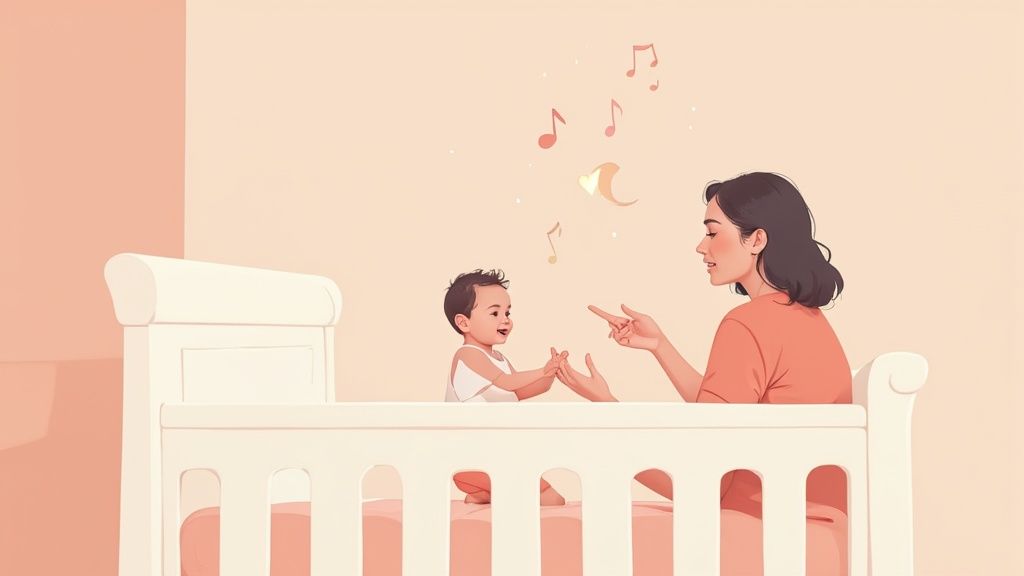
As Muslim parents, we're always looking for natural ways to nurture a love for Allah in our children's hearts right from the start. We want something that fits into the beautiful chaos of daily life with a baby, all while protecting their innocence. The Song of Bismillah is the perfect place to begin.
Think of it less as a formal lesson and more as a collection of sweet, simple melodies. These songs take the profound meaning of “In the name of Allah, the Most Gracious, the Most Merciful” and turn it into a soothing sound your baby can recognise and connect with, long before they can say the words.
A Foundation of God-Consciousness
The entire concept is beautifully simple: associating the start of any action with remembering Allah. This could be anything—from sitting down for a meal to getting buckled into the car seat. For babies and toddlers, this gentle repetition is incredibly powerful.
When you sing a Bismillah song, you're doing so much more than just singing. You are:
- Creating Positive Feelings: Your baby starts to link the beautiful sound of "Bismillah" with warm, happy moments like eating, playing, or cuddling with you.
- Building a Calm Routine: A familiar, gentle melody can signal that it's time for a new activity, helping toddlers feel more secure and cooperative during transitions (like leaving the park!).
- Nurturing Early Iman: You're planting the very first seeds of tawhid (the core belief in the Oneness of God) in the most loving and age-appropriate way possible.
This isn’t about formal lessons or flashcards; it’s about creating an atmosphere. It’s about filling your home with a gentle, constant awareness of Allah's presence in every little part of your day.
This simple practice turns mundane tasks into moments of spiritual connection. By singing before you spoon-feed your baby or open a picture book, you are teaching them that every action can begin as an act of worship and gratitude.
Ultimately, the Song of Bismillah is a tool of love. It’s a way to weave the beautiful fabric of your faith into your child's earliest memories, creating a foundation that feels as warm, safe, and comforting as your hug.
Simple Bismillah Songs You Can Sing Today
You don't need to be a professional singer to share the beauty of Bismillah with your baby. Honestly, the best songs are the simple ones you sing with love, again and again. Your voice is the most comforting sound your little one knows, and that makes these moments incredibly special and powerful for bonding.
The key is to find a rhythm that feels good to you and fits the moment. A quick, upbeat rhyme is great for playtime, while a soft, slow melody can become a treasured part of your bedtime routine.
Here are a few easy-to-learn versions of the song of Bismillah you can try right away.
The Gentle Mealtime Song
This is one of the most common and beloved versions, and it's perfect for building a beautiful routine around eating. The simple repetition helps even the youngest toddlers catch on to the keyword.
You can sing it to the tune of "Twinkle, Twinkle, Little Star," or just chant it in a soft, rhythmic way.
- Lyrics:
- Bismillah, Bismillah,
- In the name of Allah.
- Before we eat, before we drink,
- Always, always we must think,
- Bismillah, Bismillah,
- In the name of Allah.
This little rhyme effortlessly links eating and drinking with remembering Allah, creating a wonderful habit right from their very first spoonfuls.
The All-Day Action Song
Here’s a more versatile version you can adapt for almost anything—getting dressed, heading out the door, or starting a car ride. The melody is flexible, but it fits perfectly with "Are You Sleeping?" (Frère Jacques).
This song teaches your child that Bismillah is for starting everything.
- Lyrics:
- We say Bismillah, we say Bismillah,
- Before we start, before we start.
- In the name of Allah, in the name of Allah,
- Let's all start, let's all start.
Feel free to swap out the last line to match what you're doing, like "Time for play!" or "Let's go now." It’s a great way to make the song a dynamic part of your everyday life.
The Calming Bedtime Lullaby
For those quieter moments, like a nappy change or settling down for a nap, a slower, more melodic version can be incredibly soothing. This one touches on the full meaning of the phrase, gently introducing the ideas of mercy and grace.
A soft lullaby doesn't just calm your baby. It fills their last waking moments with the remembrance of Ar-Rahman (The Most Gracious) and Ar-Rahim (The Most Merciful), wrapping them in a sense of spiritual peace and security as they drift off to sleep.
Here’s a simple, calming verse you can hum or sing softly:
- Lyrics:
- Bismillah-ir-Rahman-ir-Rahim,
- In Allah’s name, I start my day.
- Bismillah-ir-Rahman-ir-Rahim,
- He’s with me when I sleep and play.
Just pick the one that feels right for your family. The goal is loving repetition, not a perfect performance. By weaving these simple words into your day, you’re giving your child a beautiful, lifelong connection to their faith.
How To Weave Bismillah Into Your Daily Routine
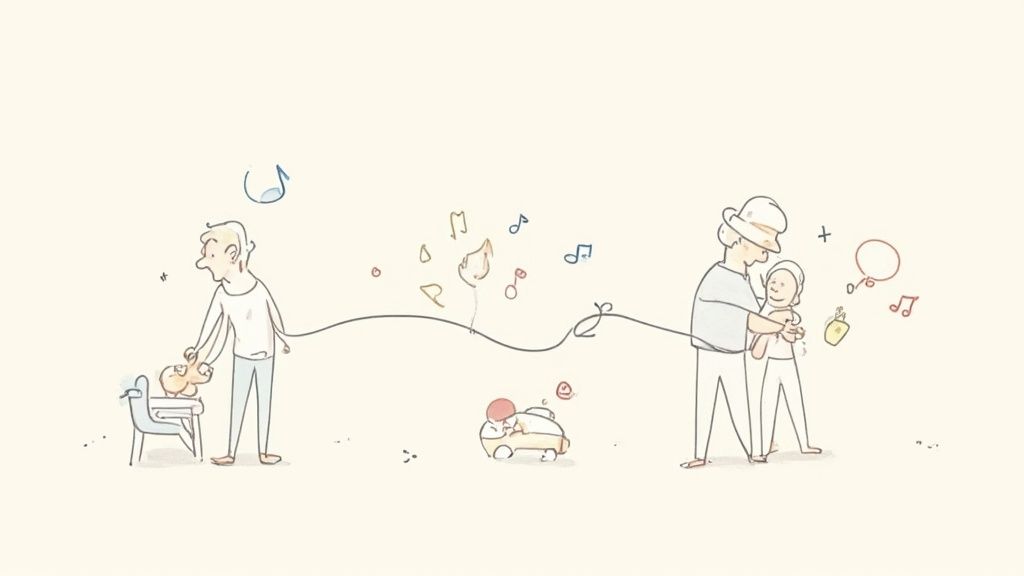
The real magic of the song of Bismillah unfolds when it becomes a natural part of your family’s rhythm. It’s not about scheduling a formal "lesson," but about weaving it into the small, everyday moments you already share, whether you're juggling work from home or managing multiple kids.
Think of it like creating a gentle, predictable soundtrack for your child’s life. Little ones thrive on routine; it gives them a sense of safety and helps them understand their world. When they hear that familiar Bismillah tune, they learn what’s coming next, which can make daily transitions feel much smoother and calmer.
This isn't about forced memorisation. It’s about gentle repetition and building a warm, positive connection to this beautiful phrase.
Finding Your Bismillah Moments
Every family’s schedule is unique, especially with a baby or toddler. The trick is to attach the song to things you’re already doing consistently.
Here are a few simple ideas to get you started:
- Mealtime Rituals: Softly sing a Bismillah song as you settle your baby into their highchair or just before you give them their bottle. It’s a wonderful way to begin a meal with peace.
- On-the-Go Transitions: Try humming the tune as you buckle your toddler into their car seat before the nursery run. It can transform a moment that’s often a struggle into a sweet, connected one.
- Playtime Beginnings: Before you spill out the building blocks or start a puzzle, a quick Bismillah rhyme can be the official start to your playtime.
- Storytime Cues: Make it a habit to sing "Bismillah" together before you open the first page of a book. This signals that it's time to snuggle up for a quiet story.
The goal is to make "Bismillah" feel as natural as a hug. When your child hears the song, they should associate it with care, comfort, and the positive start of an activity with the person they love most—you.
Making It Stick With Love
Remember, consistency beats perfection. Some days you might only manage to hum the tune once while rushing to get dinner ready before Maghrib, and that’s okay. Every single time you do it, you’re strengthening that beautiful connection in your child’s mind.
This gentle approach to teaching is incredibly powerful. If you're looking for more ways to nurture faith in these early years, our guide on how to teach Islam to toddlers is full of ideas for creating a loving Islamic environment through play.
By weaving the song of Bismillah into these everyday moments, you're doing so much more than just teaching a phrase. You’re laying a foundation of mindfulness and gratitude that will, inshaAllah, grow with them for the rest of their lives.
Choosing Halal And Developmentally Sound Nasheeds
As Muslim parents, we’re always thinking about the media our children are exposed to. We want to make sure what they see and hear is not only good for their growing minds but also aligns with our faith. Finding that perfect balance with songs and nasheeds is one of the best ways to create a peaceful, faith-filled atmosphere at home.
The conversation around music in Islam is rich and varied, and every family finds an approach that feels right for them. For many parents, that means choosing nasheeds that are vocal-only or use simple, permissible instruments like the duff (a type of frame drum). This keeps the content gentle and spiritually focused, creating a soundscape you can feel completely at ease with.
What Makes A Song Good For Your Baby
Beyond the Islamic considerations, we have to think about what's actually good for a child between 0-3 years old. A baby’s brain is a little sponge, soaking everything in, and the sounds they hear genuinely impact their nervous system and early language skills.
The best nasheeds for this age group, including beautiful versions of the song of Bismillah, tend to share a few key qualities:
- Simple Melodies: Little ones thrive on predictability. Tunes that are easy to follow and not too complex help them recognise patterns, which is incredibly soothing.
- Gentle Vocals: A baby's developing auditory system can get overwhelmed easily. Clear, soft voices are much easier for them to process and find calming.
- A Calm Pace: High-energy, fast-paced songs can be overstimulating. A slower tempo helps create a peaceful environment, perfect for winding down before a nap or for quiet playtime.
- Meaningful Repetition: Hearing phrases and sounds over and over is how babies learn to talk! Repetition helps their brains build the crucial neural pathways needed for speech.
When you're choosing nasheeds, think of them as auditory nourishment. You're looking for something pure, simple, and calming—content that nurtures their spirit without overwhelming their senses. The real goal is connection and peace, not just entertainment.
Curating A Peaceful Audio Environment
Taking a few minutes to build a playlist of gentle, faith-based songs is a true act of love. It’s a way to protect your child’s innocence and feel confident about the sounds filling your home. This careful curation is a huge part of creating a safe and loving space where their fitra (natural disposition) can truly flourish.
This is more important than ever, especially when it's so easy to stumble upon unsuitable content by accident. If you're looking for more guidance, our article on finding halal entertainment for babies has some great practical tips. By choosing with intention, you're setting the stage for a serene and spiritually uplifting atmosphere for your little one, every single day.
How Singing Supports Your Baby’s Brain Development
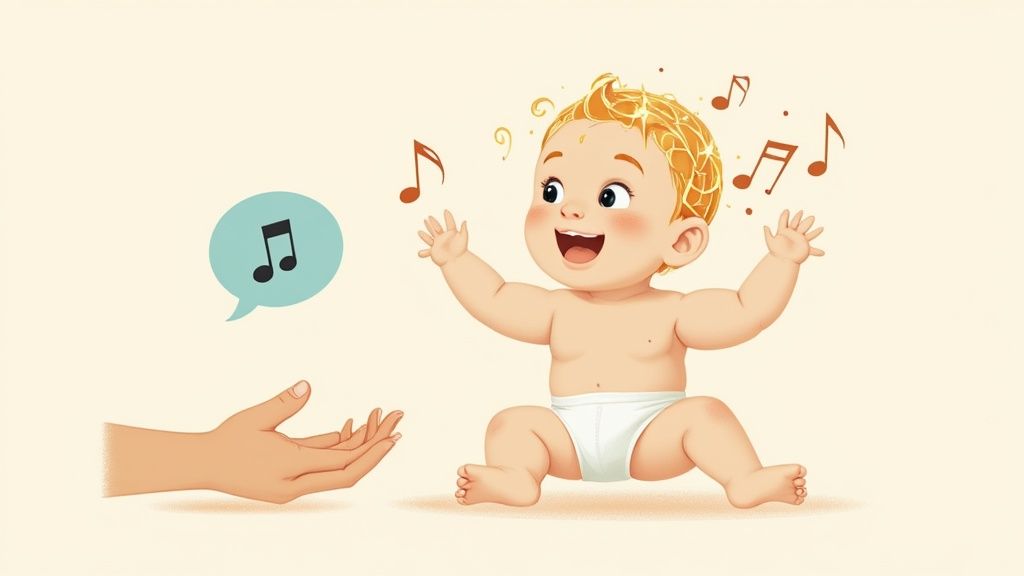
Beyond the beautiful spiritual barakah, there's something incredible happening inside your little one's brain every time you sing the song of Bismillah. That simple, loving act is a powerhouse for their development. It creates a rich sensory experience that builds a foundation for language, emotional well-being, and even coordination—nurturing their mind and spirit all at once.
This isn't about flashcards or formal lessons. It's about connection. It's about stimulating their mind through sound and love. Your baby’s brain is literally wired to tune into the rhythm and melody of your voice, making these moments a perfect opportunity for growth.
Building The Foundations For Language
The gentle repetition in a Bismillah song is like a superpower for your baby's language skills. Long before they can speak, hearing those same simple sounds and phrases over and over helps their brain recognise the patterns of language.
It’s how they learn to pick out individual sounds, understand the cadence of speech, and eventually, form their first precious words. You're giving them a natural, loving head start on the neural pathways they need to communicate.
- Sound Recognition: Simple, repeated words like "Bismillah" help your baby's ears learn to zero in on specific phonetic sounds.
- Pattern Association: The predictable melody teaches them about sequence and rhythm, which is a core part of how language is structured.
- Vocal Turn-Taking: As they get a bit older, you'll notice them cooing or babbling back. They're practicing the conversational flow they’re learning from you!
Strengthening Your Emotional Bond
Singing to your baby is one of the most powerful ways to deepen your connection. When you hold them close, look into their eyes, and sing, you create a bubble of safety, love, and undivided attention. It makes them feel completely secure.
This consistent, loving interaction releases feel-good hormones like oxytocin in both of you, cementing the deep bond that is so crucial for their emotional health. These quiet moments build a foundation of trust that will support them for years to come.
Singing isn't a performance; it's a prayerful act of connection. Your baby doesn't care if you sing in tune—they just care that you are present with them, sharing a moment of peace and love.
Connecting Music and Movement
As your baby grows into a wobbly toddler, you can start adding simple movements to the song. This is a fantastic way to develop their motor skills and body awareness, turning the nasheed into a playful game that engages their mind and body.
It doesn’t have to be complicated. Try incorporating gentle actions like:
- Clapping your hands together on the beat.
- Tapping their tiny nose or toes at the end of a line.
- Gently swaying from side to side with the rhythm.
By linking the song to these simple actions, you're helping your child connect sounds with physical movements—a key developmental milestone. It just goes to show how a simple song of Bismillah can be a complete, enriching activity, nurturing their spiritual awareness, emotional security, and physical coordination all in one beautiful moment.
Finding Safe, Ad-Free Content for Your Little One
Let's be honest, screen time is one of the biggest anxieties for today's Muslim parents. A few minutes of a calming video can be a lifesaver when you're trying to make dinner or get ready for salah. But mainstream video sites just weren't designed with our youngest children in mind.
It’s a frustration every parent knows. You find a sweet, gentle nasheed, but then a loud, jarring ad for something completely inappropriate pops up. Or worse, the next video that autoplays is overstimulating and chaotic. This constant vigilance is exhausting and can instantly shatter the peaceful, halal atmosphere you've worked so hard to build.
What you really need is a digital space you can trust implicitly—a place where your child's fitra is nurtured and protected.
The Peace of Mind of a Curated Space
A truly safe digital environment for a baby or toddler isn't just about filtering out the bad stuff. It’s about intentionally creating a library of gentle, beneficial, and beautiful content that aligns with our Islamic values and supports healthy early development.
Think about a platform where every single video is:
- 100% Ad-Free: Absolutely no commercials or sponsored content to interrupt the experience. Just pure, simple content.
- Carefully Screened: Each video has been hand-picked and reviewed to ensure it's halal, gentle in tone, and models positive, wholesome behaviour.
- Developmentally Appropriate: The content is specifically made for the 0–3 age group, featuring calm pacing and simple melodies that soothe and nurture, never overwhelm.
When you choose a curated platform, you’re not just getting videos; you’re getting peace of mind. You no longer have to hover over the screen, worried about what might play next. You can rest easy knowing that everything your child sees—including a beautiful song of bismillah—has been chosen with their spiritual and developmental well-being at its heart.
For parents searching for this kind of trusted alternative, exploring the world of halal baby videos can be a game-changer. It’s about turning screen time from a source of worry into a positive, faith-filled tool for your family.
Common Questions Parents Ask About the Bismillah Song
As you start to weave the song of Bismillah into your family's daily life, some questions will naturally pop up. This is a journey of love and connection, and finding what feels right for your family is what matters most. Here are some thoughtful answers to the things parents often wonder about.
When’s the Best Age to Start Singing This Song?
Honestly, you can start from day one. For newborns, the simple sound of your voice and the calming rhythm of a Bismillah song are deeply comforting. It's less about them understanding the words and more about them feeling your love and presence—a beautiful way to bond right from the start.
As they grow into toddlers, they’ll begin to recognise the tune. It becomes a happy, familiar sound they associate with positive moments, like sitting down for a meal or snuggling before a nap.
What if I Can't Sing in Tune?
Your baby thinks your voice is the most wonderful sound in the entire world, full stop. What really matters isn't hitting the right notes; it’s the love, warmth, and security they feel when you sing to them. This is all about connection, not a concert performance.
Are Instruments Okay in Nasheeds for Children?
This is a great question, and there are different scholarly perspectives on it. The most important thing is to follow what you feel is best for your family’s spiritual practice. Many parents feel most comfortable with nasheeds that are vocal-only or use the duff (a simple, traditional frame drum), which has wide acceptance.
The goal is to choose calm, gentle sounds that nurture your child’s spirit without being overstimulating. You’re essentially creating a peaceful and spiritually uplifting audio environment for them that aligns with your family's values.
How Do I Get My Toddler to Actually Participate?
Patience and repetition are everything! Toddlers learn by watching, playing, and doing things over and over again. You could try adding simple hand motions—like gentle clapping or swaying—while you sing. Make it a regular part of fun, happy moments, like bathtime, without any pressure for them to join in.
You'll be surprised. One day, after hearing it become a familiar and joyful part of their routine, they'll likely start humming along on their own.
Ready to fill your home with gentle, faith-aligned content? Babymode offers a 100% ad-free library of nasheeds, Quranic stories, and more, all carefully screened for your little one. Join the Babymode waitlist for early access and give your child a safer screen time experience.