So, what exactly is a tummy time toy? At its heart, it’s a simple tool designed to make your baby’s “floor workout” a little more interesting and a lot more effective. Think of it as their first personal trainer—something that catches their eye and encourages them to lift their head, push up with their tiny arms, and look around.
This simple interaction is incredibly important. It helps build foundational strength in their neck, back, and shoulders, paving the way for all the bigger milestones to come, inshaAllah.
Why Tummy Time Is Your Baby’s First Workout
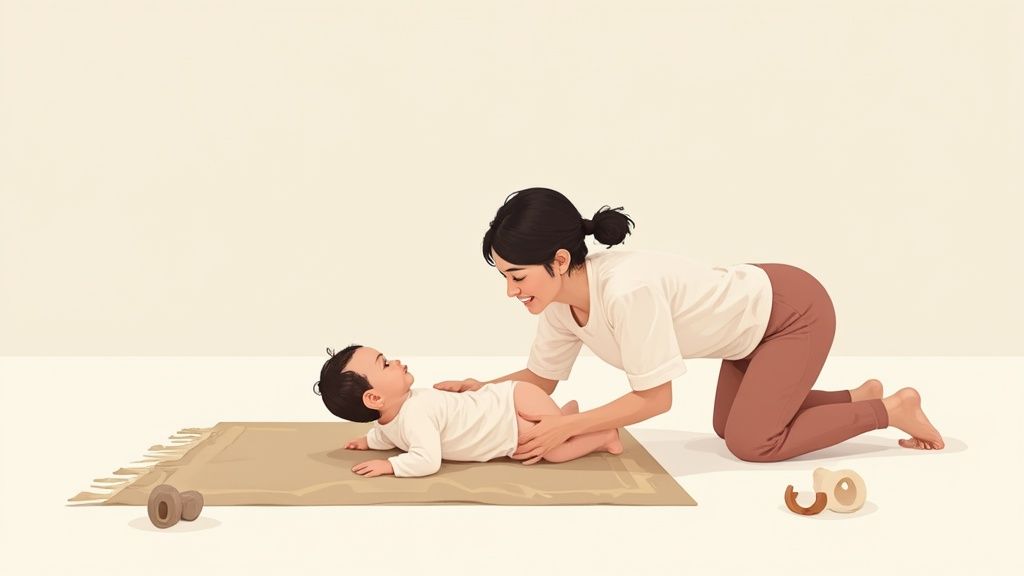
For a brand-new baby, lying on their stomach is hard work. They spend most of their time on their backs, so this new position challenges them to use muscles they haven't really needed before. A well-chosen tummy time toy can transform this effort from a chore into a captivating little game.
It gives them a focal point, a reason to lift and turn their head to see, hear, or touch something intriguing. That small act is more powerful than it looks, setting the stage for their entire physical development.
The Foundation for Major Milestones
Every big movement your baby will eventually make—from rolling over to sitting up and, finally, crawling—starts right here, with the strength they build during these short sessions on the floor. Without this foundational muscle control, hitting those milestones can be a bit more challenging.
A good tummy time toy helps by:
- Strengthening Core Muscles: The simple act of lifting their head and pushing up with their arms engages their entire upper body, from their neck and shoulders to their back and core.
- Improving Head Control: Consistent practice helps your baby gain the steady head control they’ll need for sitting upright and taking in the world around them.
- Preventing Flat Spots: Spending supervised time on their tummy is also key to preventing positional plagiocephaly, or the flat spots that can develop on the back of their head.
More Than Just a Toy
Ultimately, the goal isn't just about physical strength; it's about creating a positive and gentle routine. In a Muslim home, where calm and connection are so valued, tummy time becomes a beautiful opportunity for bonding. It’s a moment to get down on the floor with your baby, share smiles, and celebrate their small but mighty efforts.
This growing appreciation for developmental aids is something we're seeing everywhere. The global market for infants and toddlers toys was recently valued at USD 16.7 billion. Within that, activity toys alone made up a USD 3.7 billion share, which really shows how many parents are looking for tools that actively support their child's growth. You can read the full research about the growth of developmental toys for more details.
How to Choose a Toy That Aligns With Your Family's Values
When you're choosing a tummy time toy, you're doing more than just picking something bright and colourful off a shelf. For many Muslim families, this is a chance to bring items into our homes that reflect our values of simplicity, safety, and gentle development. It's an opportunity to be really intentional about what captures our baby's attention during these precious early months.
This often means looking past the flashy electronic gadgets. Instead, we can focus on toys made from safe, natural materials that feel good in tiny hands and are perfectly safe for curious little mouths.
Prioritizing Safe and Natural Materials
Let’s be honest, your baby is going to try to taste-test their tummy time toy. It's inevitable. This simple fact makes the safety of the material a top priority for any parent. Many of us are actively looking for alternatives to plastics, which can sometimes contain questionable chemicals.
Consider these gentle, baby-safe options instead:
- Natural Wood: Toys made from unfinished or naturally finished woods like beech or maple are fantastic. They’re durable, a breeze to clean, and offer a wonderful sensory texture for little hands to explore.
- Organic Cotton: Think soft, crinkly books or fabric toys. Made from organic cotton, they are perfect for sensitive skin and provide just the right amount of gentle auditory stimulation.
- Food-Grade Silicone: This non-toxic, BPA-free material is wonderfully soft on gums. It’s an ideal choice for toys that will likely double as teethers.
By choosing these kinds of materials, you're creating a play environment that is not only safe but also feels more grounded and connected to the natural world.
Gentle Sensory Stimulation Over Electronic Overload
A baby’s developing brain doesn’t need a circus of loud noises and flashing lights to learn. In fact, simple sensory experiences are often far more beneficial. They also help create a calm and peaceful atmosphere in the home—something especially welcome between prayer times or during a quiet afternoon nap.
A great tummy time toy provides gentle engagement through features like:
- High-Contrast Patterns: For a newborn’s developing eyesight, simple black-and-white images or bold, colourful geometric shapes are incredibly captivating.
- Varied Textures: A toy that offers different surfaces—smooth wood, soft fabric, a bumpy silicone edge—encourages exploration and learning through touch.
- Subtle Sounds: The gentle crinkle of a fabric book or the soft rattle of a wooden toy provides just enough auditory feedback without being jarring or overwhelming.
The goal is to spark curiosity, not to overstimulate. A simple, well-designed toy encourages your baby to focus and explore at their own pace, which is a fantastic way to build concentration skills right from the start.
Finding Beauty in Simplicity and Abstract Design
For many families, there's a preference for toys that don't feature animate faces, which aligns with values of modesty and a focus on the beauty of Allah’s non-representational creation. This doesn't limit your options at all; if anything, it opens up a world of beautiful and creative designs.
Instead of looking for characters, you can find a tummy time toy that features:
- Geometric Shapes: Think circles, squares, and triangles in beautiful, contrasting colours.
- Nature Themes: Look for abstract patterns of leaves, waves, or stars.
- Abstract Forms: Simple, graspable shapes that invite your baby to explore form and texture are perfect.
These choices not only respect your family's values but also encourage a different, wonderful kind of imaginative play. They nurture a sense of curiosity about the world’s many patterns and shapes.
How to Create a Calm Tummy Time Routine
Let's be honest, adding another "must-do" to your baby's day can feel overwhelming, especially when trying to manage prayer times, meals, and other household tasks. The secret to tummy time is making it a calm, predictable part of your family’s natural rhythm, not just another task to check off a list.
The key is timing. You want to catch your baby when they're happy, fed, and alert—not fussy or sleepy. A great little window of opportunity is often right after a diaper change or once they've had a bit of time to digest after a feed. That’s when they’re most comfortable and ready to play.
Setting Up a Cozy and Inviting Space
The right environment can make all the difference. You don’t need a fancy playroom; a quiet corner in the living room works perfectly. A soft prayer mat, a plush rug, or a dedicated play mat creates a special spot. What truly matters is getting down on the floor with them, making eye contact, and showing them this is a safe, loving activity you're doing together.
Think about what makes a space feel peaceful:
- Soft Lighting: Harsh overhead lights can be jarring. If you can, use natural light from a window.
- Minimal Distractions: Turn off the TV and set your phone aside. This is your one-on-one time.
- A Comfy Surface: The mat should be soft, but firm enough for your baby to get a little push-up action going.
A Gentle and Sustainable Routine
When you're just starting out, consistency beats duration every time. It's much better to have a few short, happy sessions than one long, stressful one. Many parents find it easier to build this habit by linking it to something they already do every day. Building that structure helps your baby know what to expect. If you're looking for inspiration, our guide to creating a Muslim toddler routine has some wonderful tips you can adapt for your little one.
Start small and go from there. A simple, effective plan could look like this:
- Begin with Short Bursts: Aim for just two to three minutes, a few times a day. Seriously, that's it.
- Place the Toy: Put an engaging tummy time toy, like a high-contrast card or a baby-safe mirror, just within their view to spark their curiosity.
- Offer Gentle Encouragement: Your voice is the best motivator. Talk to them, sing a quiet nasheed, or just make silly sounds.
- Know When to Stop: If your baby starts fussing or seems tired, it’s time for a break. Always try to end on a positive note.
This gentle approach transforms tummy time from a developmental chore into a cherished daily ritual, strengthening your bond one little lift at a time.
Our Top Recommended Tummy Time Toys
It’s easy to get overwhelmed by the sheer volume of baby products out there, but choosing a great tummy time toy is simpler than it looks. The best ones are usually the most straightforward—designed to spark a baby's natural curiosity and support their development without screens or overstimulation.
To help you find the right fit for your little one's age and your family’s style, here are some go-to options. It's all about making floor time an engaging and positive part of your day.
A good routine is the key to success. You don't need a complicated schedule; just find small moments to weave it into your day.
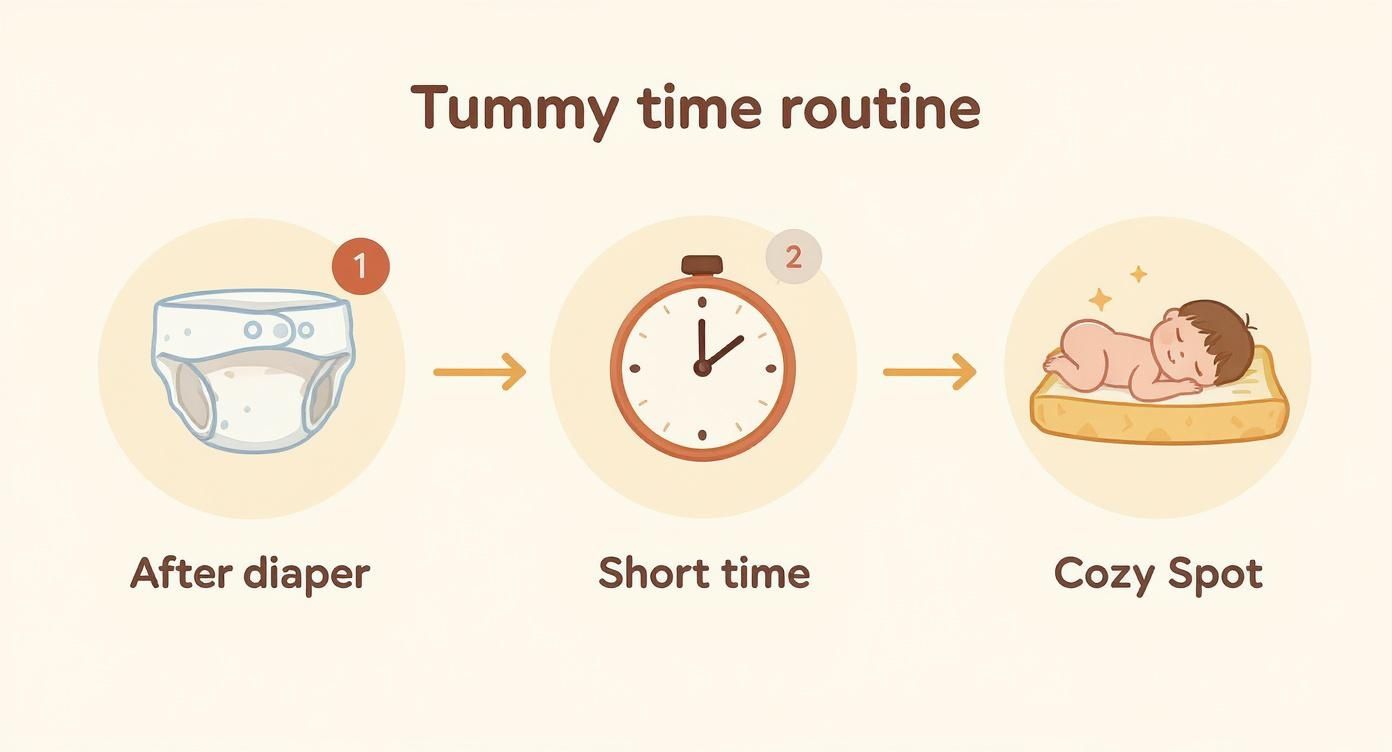
As you can see, the best approach is to start small. A few minutes after a diaper change in a comfortable, safe spot is all it takes to begin building those important muscles.
For the Tiniest Explorers: 0 to 3 Months
In those first few months, a baby's vision is still coming into focus. They can't see a full spectrum of color yet, which is why simple, bold patterns are so mesmerizing to them. This is the perfect time for high-contrast toys.
- High-Contrast Cards: You can't go wrong with simple black-and-white flashcards featuring geometric shapes or abstract patterns. Prop one up in front of your baby, and watch them work to lift and turn their head to get a better look.
- Unbreakable Mirrors: A baby-safe mirror laid on the floor is fantastic. When your baby catches a glimpse of that little person in the reflection, their curiosity is instantly sparked, encouraging them to push up and investigate.
For Growing Movers and Shakers: 3 to 6 Months
Once your baby gets stronger and more engaged with the world, it's time to introduce toys that awaken more of their senses. The goal here is to encourage new movements like reaching, pivoting, and eventually, rolling.
- Crinkle Books: Soft, fabric books with crinkly pages are a sensory jackpot. Look for ones with different textures, tags, or even abstract patterns that are safe for chewing.
- Water Play Mats: These are brilliant for a mess-free sensory adventure. As your baby presses down on the mat, the water and floating shapes shift around. This encourages them to adjust their weight and push with their hands, which builds the core and arm strength needed for rolling over.
- Simple Rolling Toys: A lightweight wooden roller or a soft, textured ball placed just beyond their grasp is an amazing motivator. It nudges them to reach and pivot, strengthening those all-important muscles for crawling. This is a classic example of a cause-and-effect toy in action.
Comparing Tummy Time Toy Options
To make the choice even clearer, here’s a quick breakdown of how these different toy types stack up. Think about your baby's current stage and what might capture their attention the most.
| Toy Type | Best For Age | Key Developmental Benefit | Things to Consider |
|---|---|---|---|
| High-Contrast Cards | 0–3 months | Encourages head lifting and turning | Simple, but highly effective for visual tracking |
| Unbreakable Mirror | 0–4 months | Promotes self-awareness and pushing up | Must be shatterproof and baby-safe |
| Crinkle Books | 3–6+ months | Tactile and auditory stimulation | Look for varied textures and chewable corners |
| Water Play Mat | 3–6 months | Builds core strength for rolling | Requires setup (water filling) and supervision |
| Rolling Toys | 4–7 months | Motivates reaching, pivoting, & crawling | Choose lightweight materials that are easy to grasp |
Ultimately, every baby is different, so what works for one might not work for another. The key is to find something that makes floor time feel like a joyful game, not a chore.
The most effective tummy time toy is one that invites interaction without dictating it. It should capture your baby’s interest and encourage them to explore, move, and discover at their own natural pace, turning effort into a joyful game.
Whether it’s a simple set of cards or a squishy water mat, the right toy can transform this essential daily routine. It becomes a wonderful opportunity for connection, discovery, and growth, inshaAllah.
Creative Tummy Time Ideas Without Toys
You don't always need a special toy to make tummy time work. In fact, some of the best tools for your baby’s first little workout session are probably sitting in your house right now. Your face, your voice, and a dash of creativity are often the most powerful things you can offer.
Simple moments can turn into little bursts of discovery. Think about draping a colourful hijab with a beautiful pattern just out of reach—it can be the perfect motivation for your baby to lift their head and focus. Getting down on their level on the prayer mat so they can see your smiling face provides more connection and stimulation than any plastic toy ever could.
Simple DIY Sensory Fun
Creating a rich sensory experience is much easier than it sounds, and it doesn't have to cost a thing. A little bit of resourcefulness is all it takes to spark your baby's curiosity.
- Fabric Scraps: Gather different textures from around the house—a piece of soft velvet, some smooth silk, or even a swatch of bumpy corduroy. You can simply let your baby touch them or stitch them onto a small piece of cardboard to create a mini sensory board.
- Sealed Shakers: Find a small, clean plastic bottle and fill it with some uncooked rice or lentils. Seal the lid on tight with strong glue, and you have an instant shaker. The gentle sound is perfect for catching their attention.
- Household Items: A set of shiny (and baby-safe) measuring spoons or a soft, unused paintbrush can offer fascinating new textures and reflections for your baby to explore while you supervise.
The real goal here is to celebrate simplicity. These small, creative activities show that you can provide amazing developmental experiences with just love, intention, and a bit of imagination.
The market for baby products is absolutely massive. The newborn developmental toys subcategory alone is valued at USD 3.512 billion, which just goes to show how much parents are investing in early development. But you can get incredible results with things you already have. You can discover more insights about the growth in the baby toys market on custommarketinsights.com.
Don't forget the power of your own voice! Our guide on using animal sounds for toddlers has some fun ideas you can easily adapt for your baby. Making gentle mooing or chirping sounds can be a wonderful way to encourage them to turn their head and look right at you.
What to Do When Your Baby Dislikes Tummy Time
If your baby starts fussing the second their belly hits the floor, you are in very good company. This is easily one of the most common hurdles parents run into. For a tiny infant, lifting that relatively heavy head against gravity is a serious workout, so it's only natural for them to complain.
The trick is to meet them right where they are, with plenty of patience and gentle persistence. Instead of trying to push through the tears, we can tweak the experience to feel more secure and comfortable. This helps slowly build their strength and, just as importantly, their confidence.
Gentle Strategies for Happier Tummy Time
A small shift in your approach can completely change the game. The real goal is to build positive feelings around tummy time, even if you’re only doing it for a few seconds at a time. And trust me, every second counts.
Start on Your Chest: The best place for tummy time in the early days is right on you. Lie back on the couch or in bed and let your baby rest on your chest. They'll feel your warmth and hear your heartbeat, which is incredibly comforting, and they’ll be naturally motivated to lift their head to look at your face.
Use a Support Prop: Grab a small receiving blanket, roll it up, and tuck it under your baby's chest and armpits. A nursing pillow works great for this, too. That little bit of support makes it much easier for them to lift their head and gives them a better view of that interesting tummy time toy you've placed in front of them.
Keep it Short and Sweet: Forget about long sessions. Consistency is so much more important than duration. Aim for just 30-60 seconds at a time, but do it multiple times throughout the day. Tacking on a quick session after every diaper change is a fantastic way to build a routine without it feeling like a chore.
Think of it as a gentle introduction, not a demanding workout. You want to end the session while your baby is still reasonably happy, teaching them that this is a positive, temporary activity.
By reframing tummy time as a special moment of connection, you can transform the experience for both of you. With a little patience and a few simple tweaks, your baby will gradually build the strength and tolerance to enjoy their time on the mat, inshaAllah.
Common Questions About Tummy Time Toys
It's completely normal to have questions when you're wading through the world of baby gear. Let's clear up a few of the most common ones parents ask about tummy time toys so you can feel totally confident.
When Should We Start Tummy Time?
Believe it or not, you can start from the very first day you bring your baby home, assuming they're healthy and were born full-term. In those early days, tummy time is incredibly short and sweet.
Simply laying your baby on your chest for just one or two minutes at a time, a few times a day, is a perfect beginning. It’s a wonderful way to bond and it gets them used to the position in a warm, secure space. The goal isn't endurance; it's all about gentle, consistent practice.
Are Electronic Toys with Sounds and Lights Okay?
This really comes down to what feels right for your family. Many Muslim parents prefer simple, non-electronic toys because they help create a more peaceful and focused atmosphere, which blends beautifully into a calm home environment.
Often, toys that offer just a little bit of stimulation are more than enough to spark a baby's curiosity.
- High-contrast cards are fantastic for a newborn’s developing eyes.
- Soft crinkle books give that satisfying tactile and auditory feedback.
- Simple wooden rollers encourage your baby to reach and move without being too much.
If you are thinking about an electronic tummy time toy, try to find one with soft, natural sounds and gentle, warm lights to avoid overwhelming your little one's senses.
The most important thing is making tummy time a positive experience. A toy should simply invite curiosity and encourage your baby to explore at their own pace, turning what can be hard work into a moment of happy discovery.
How Do I Make Sure a Tummy Time Toy Is Safe?
Safety is always the number one priority, SubhanAllah. Since babies explore everything with their mouths, the materials a toy is made from are incredibly important. Always look for toys that are clearly labeled as non-toxic.
Try to stick with materials like 100% organic cotton, natural, unfinished wood, or food-grade silicone. It's also a good habit to regularly check for any small parts that could break off and become a choking hazard. And finally, pick toys that are easy to wipe down or toss in the washing machine to keep things clean and hygienic for your baby.
At Babymode, we understand how important it is to create a calm, faith-aligned environment for your child's first years. To explore our curated library of gentle, ad-free content designed just for Muslim families, you can join the waitlist at https://babymode.ai.